
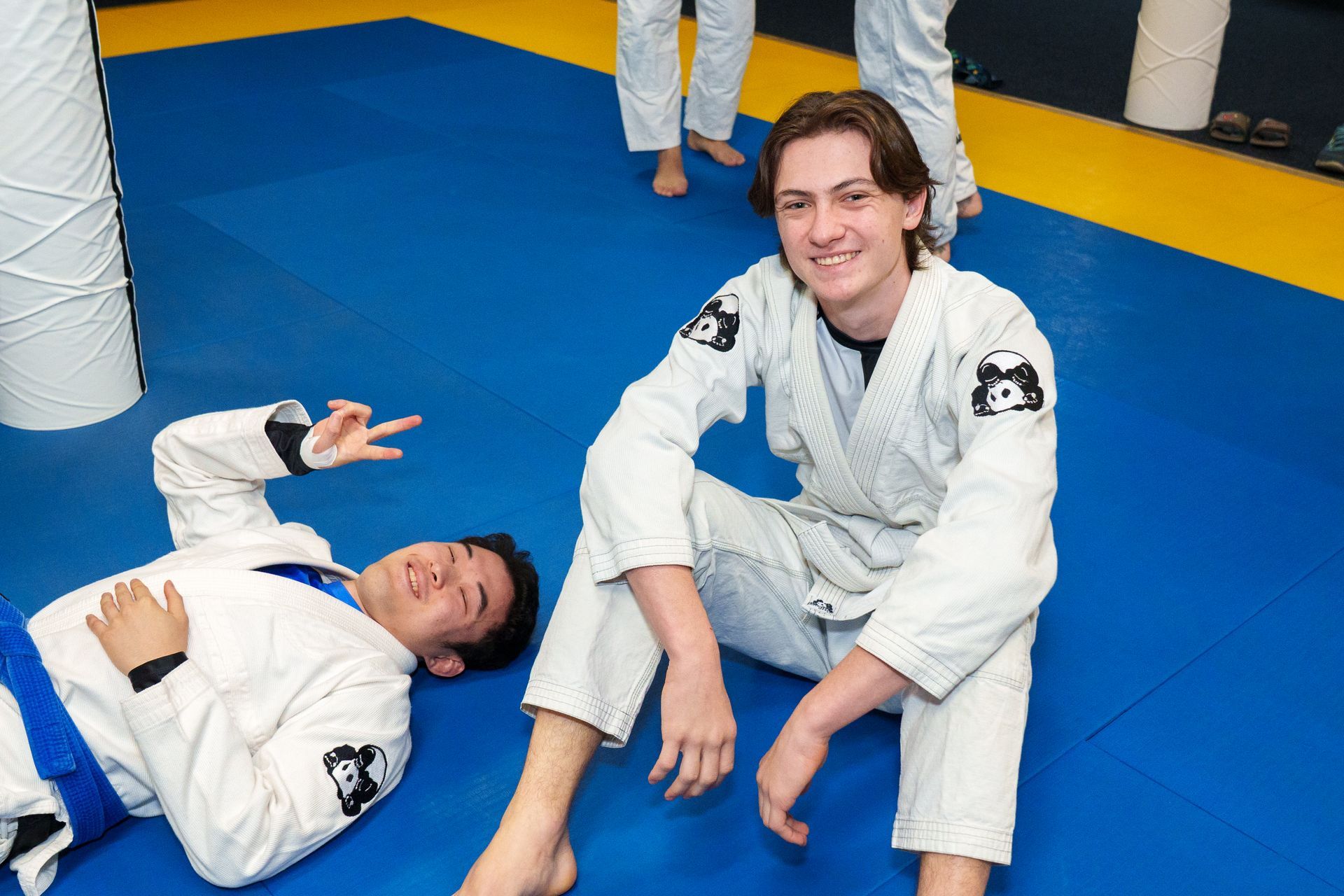
Adult jiu jitsu turns a room full of strangers into training partners who actually look out for you.
If you have ever tried to make new friends as an adult, you already know the weird part: everyone is busy, routines are set, and most “social” time happens while staring at a screen. Adult jiu jitsu is different because it is built around real interaction, shared effort, and a clear reason to show up again next week.
In our adult jiu jitsu classes, community is not a side benefit. It is baked into the training itself. You learn through partner drills, you rotate with different people, you get coached in the moment, and you gradually become part of a consistent group that recognizes you when you walk in. Research backs up what we see on the mats: in one survey, 100 percent of adult BJJ participants reported a sense of community, along with major improvements in mood and confidence.
Bethlehem has plenty of ways to stay busy, but not as many ways to feel connected. That is why Bethlehem martial arts programs that emphasize training partners, not just workouts, can become a real anchor in your week.
Why adult jiu jitsu creates real connection (and not just small talk)
Most adult friendships are built on repeated proximity plus shared challenge. That is exactly what Brazilian Jiu-Jitsu delivers. You are not trying to “network” or force conversation. You are learning a skill that requires trust, attention, and cooperation, and the friendships show up naturally.
You need partners, and partners need you
Adult jiu jitsu is one of the few fitness activities where progress depends on other people. Drilling requires timing and feedback. Sparring requires control and respect. Even warming up feels different when you are moving with a room full of people working toward the same thing.
Over time, you stop thinking of classmates as “random people in a room” and start thinking, that person helps me get better at guard passing, or that person always reminds me to breathe when I tense up. Those small moments add up.
Shared struggle builds respect quickly
There is something honest about training. Everyone taps. Everyone gets stuck. Everyone has a day where their body feels heavy and their brain feels slow. When you go through that together, ego softens and respect grows.
Studies mirror this. Adult BJJ participants report increased respect and a strong sense of community, and those outcomes are not surprising. The mat is a place where effort is obvious and excuses do not last long.
The community benefits you feel outside the gym
When people hear “martial arts,” they often think about fighting. What most adults actually want is a healthier mind, a stronger body, and a place to belong. Adult jiu jitsu tends to deliver all three, especially when you train consistently.
Stress relief that actually sticks
One of the most consistent reports from adult trainees is improved mood. In a survey of adult participants, 96.9 percent reported better mood, and 87.5 percent reported reduced anxiety. That is not magic. It is a mix of physical exertion, focused problem-solving, and social connection.
After class, your nervous system feels like it has been turned down a notch. You get a clean mental reset. You also get the simple comfort of being around people who want you to succeed.
Confidence that is earned, not hyped up
Confidence in adult jiu jitsu comes from doing hard things in small doses. You learn how to stay calm in pressure, how to escape bad positions, and how to keep thinking when you would normally freeze.
That is likely why 87.6 percent of adult trainees in one study reported improved confidence. Confidence becomes less of a mood and more of a skill.
Belonging that helps fight isolation
Bethlehem is full of hardworking adults, including healthcare workers, educators, tradespeople, students, veterans, and first responders. Many of those roles can be isolating, even when you are around people all day. BJJ has been shown to create supportive relationships that combat isolation, particularly for veterans and first responders, because the gym environment encourages camaraderie and shared challenge.
We see that same pattern locally. People show up for training, and pretty soon they have a crew. Not an online group chat that fizzles, but real people who notice when you miss a week.
What the first few weeks feel like in our adult program
Starting adult jiu jitsu can feel intimidating, mostly because you do not know the rules yet. The good news is that you do not need to be “tough” to begin. You just need to be willing to learn.
Week 1: learning the rhythm
Early on, your goal is simple: understand how class works. You will learn basic movement, how to protect yourself, and a couple of fundamental positions. You will also learn gym etiquette, like tapping early and training safely. Most beginners are surprised by how technical it is.
Weeks 2 to 4: names, familiar faces, and small wins
This is where community starts to click. You recognize people. You find a couple of training partners who match your pace. You also start collecting small wins, like escaping side control once or hitting a sweep you drilled.
Those small wins matter. They make you want to come back, and they give you something to talk about that is not work.
Month 2 and beyond: consistency becomes your social glue
Once you train regularly, your schedule naturally overlaps with the same group. You start joking between rounds, swapping notes on technique, and encouraging new people who walk in looking just as unsure as you once felt. This is where adult jiu jitsu in Bethlehem PA stops being “a class” and starts being “your place.”
How adult jiu jitsu builds long term friendships through progression
A big reason BJJ creates lasting community is the belt system and the long timeline. This is not a quick certificate. It is a steady process that rewards patience.
Trends show an average of about 2.3 years to reach blue belt and roughly 9 years to reach brown belt, depending on consistency. That timeline is not a drawback. It is the point. You get years of shared milestones with the same people.
As experience builds, so do mental skills. Research comparing ranks shows black belts scoring significantly higher in mental strength, resilience, self-efficacy, self-control, and life satisfaction than white belts, with training experience correlating positively with these traits. The longer you train, the more you change, and the more your relationships deepen because people witness that change.
What makes a Bethlehem martial arts community feel welcoming
“Friendly” is easy to say. A welcoming training environment is more specific. It is the small behaviors that make beginners feel safe and make advanced students stay humble.
In our adult classes, we aim for a culture where:
• You can ask questions without feeling judged, because learning beats pretending
• You can train hard without training reckless, since partners come first
• You can start at any fitness level and improve steadily through technique
• You can miss a week, come back, and still feel like you belong
• You can be competitive with yourself, not hostile with others
When those things are consistent, friendships form fast. Not forced friendships, either. The kind where you trust someone because you have trained with them when you were tired, frustrated, or nervous.
A practical look at schedule, training frequency, and adult life
Adults do not need another hobby that makes life harder. The best training plan is one you can sustain.
Many adults train 2 to 3 times per week, and that is enough to improve steadily while keeping work and family moving. Some train more, and in one study 62.5 percent trained 3 to 5 times per week, which shows how motivating the community can become once you get momentum.
To help you fit it in, our class schedule is designed to support working adults, parents, and students. You can choose a pace that matches your season of life, then adjust as you go.
Safety, comfort, and why “toughing it out” is not the goal
A common concern with adult jiu jitsu is injury. It is a fair question, and it deserves a real answer. The safest training environments share a few habits: controlled intensity, technical focus, and clear communication.
We coach you to tap early, move with control, and prioritize good positions over explosive strength. Over time, jiu jitsu can improve body awareness and movement quality, which is one reason some research notes injury reduction benefits for demanding professions when training is done thoughtfully.
If you are returning to exercise after a long break, you are not behind. You are starting. We will meet you there.
How to get started without overthinking it
Starting is easier when you know what to expect. Here is the simplest path into adult jiu jitsu:
1. Check the class schedule page and pick a beginner-friendly time that you can repeat weekly.
2. Show up a little early so we can help you get oriented and answer quick questions.
3. Train at a comfortable pace, focusing on learning positions and safe movement.
4. Rotate partners and introduce yourself, because community starts with small hellos.
5. Keep your first goal basic: attend consistently for a month and let the routine settle.
That is it. No dramatic transformation required. Just steady attendance and a willingness to learn.
Take the Next Step
If you want adult jiu jitsu to be more than exercise, you need a place where people train with you, not around you. That is what we work to build every day, and it is why community tends to grow quickly once you step on the mats.
When you are ready to experience adult jiu jitsu in Bethlehem PA in a way that emphasizes friendship, safety, and long term progress, you will find that approach here at Inverted Gear Academy, with a class culture that makes it easy to belong and a program that keeps you improving.
Become part of a disciplined and welcoming training community by joining an Adult Jiu-Jitsu class at Inverted Gear Academy.