
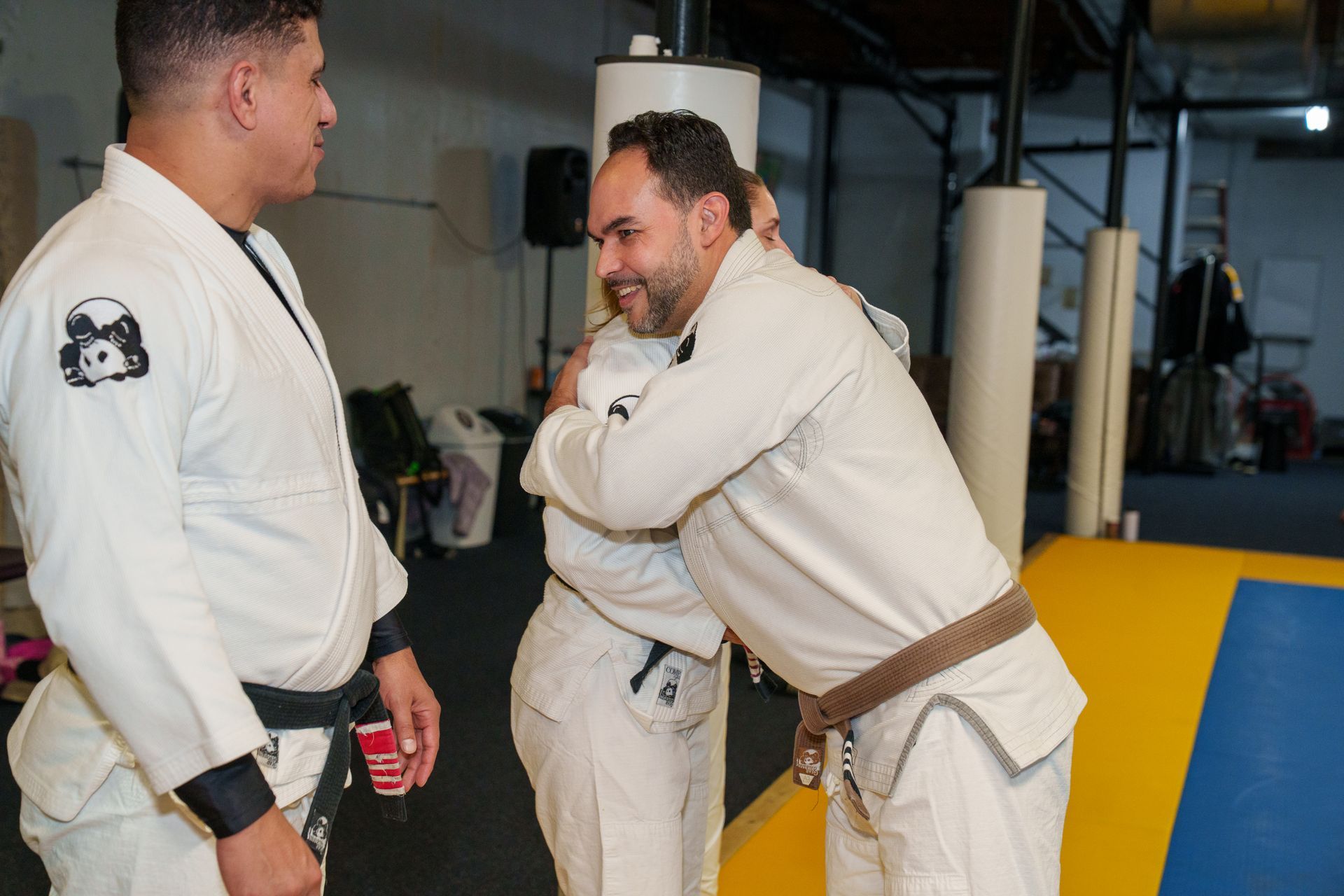
Brazilian jiu jitsu has a way of turning quick introductions into real training partners you can count on.
Walk into a room where brazilian jiu jitsu is being trained and you can feel it right away: people are focused, but the vibe is not cold. There is effort, laughter between rounds, and that quiet nod you give someone after a tough roll. In Bethlehem, PA, we see friendships form in a surprisingly consistent way because the training requires cooperation before it ever rewards competition.
The reason is simple: you cannot learn this art alone. You need partners for drilling, timing, and live rounds, and you need a room where everyone is trying to get better without making it weird. Over time, that repeated contact builds trust. If you are new to Bethlehem martial arts or just looking for a place where you can train hard and still feel welcome, the social side of training matters more than most people expect.
This article breaks down how the friendships actually happen, why they last, and what we do inside our program and class schedule to make those connections easier, safer, and more natural for you.
Why brazilian jiu jitsu creates friendships faster than most hobbies
A lot of activities say they are social, but you still end up doing the same small talk for months. In brazilian jiu jitsu, you work with someone immediately, usually within the first five minutes. That shared task gives you a reason to communicate clearly, help each other, and reset after mistakes. It is practical, and it is personal without being intrusive.
There is also a built-in honesty to the mats. If something works, you feel it. If something does not, you both know it. That feedback loop makes conversations easier because you are talking about real experiences, not just opinions. When you spend week after week solving problems together, friendships are a natural byproduct.
Another factor is time. Most people do not reach black belt quickly, and it is common to train for years. Many practitioners average multiple years across early belts, and the longer you train, the more your circle becomes a steady group of familiar faces. That consistency is where the lasting part comes from.
The trust factor: training contact with clear rules
Trust is not a motivational poster. It is earned in small moments, like someone choosing control over ego, or letting go of a submission because you tapped. In our classes, we treat safety as a skill you learn, not a thing you either have or do not have.
You will notice it in how partners are matched and how rounds are structured. We want you to feel challenged, but not thrown into chaos. When you know the room respects the tap and respects your pace, you relax enough to learn, and you also relax enough to connect.
For people who have not done close-contact sports before, the first few sessions can feel like a lot. That is normal. We coach communication early: how to ask to drill lighter, how to reset if something feels off, and how to be a good partner even when you are brand new. That kind of clarity makes friendship easier because nobody has to guess what is acceptable.
Shared struggle is a social shortcut, and the mats prove it
There is something about trying a technique ten times and failing nine times that makes you laugh with the person next to you. It is a humble experience. You both look a little clumsy, you both improve, and you both remember the day it finally clicked. Those small wins become shared memories.
We also see this when someone returns after a break, whether it was a busy season at work, a family change, or an injury. The room notices. People ask where you have been, not in a guilty way, but in a genuinely glad-you-are-back way. That kind of recognition is rare in adult life.
Injuries are part of the reality of grappling, especially as intensity rises at higher levels. Surveys in the broader community have shown higher belts can face notable injury rates, which is exactly why a supportive training culture matters. When your training partners care about your longevity, the friendships stop being superficial and start feeling more like a team.
Your first weeks: how friendships form when you are the new person
Most beginners worry about being awkward, slowing the class down, or not knowing anyone. In practice, beginners tend to be the center of attention in a good way because everyone remembers being new. If you show up consistently, you will have partners quickly, even if you are quiet.
We structure beginner-friendly learning with clear roles. Sometimes you will be the person practicing the move. Sometimes you will be the person giving your partner the right resistance so the rep actually matters. That back-and-forth creates respect early, because both roles are important.
A small tip that helps: introduce yourself to two people per class for the first couple of weeks. You do not need to force a conversation. A simple “Want to drill together?” is enough. Training does the rest.
The social ecosystem: drilling partners, open mats, and small rituals
Friendships deepen through repetition, and our schedule is built to encourage it. The more often you see the same people, the easier it becomes to build a rhythm: warm-up jokes, quick technique questions, and that familiar post-class handshake.
Here are a few places friendships reliably grow inside the gym experience:
• Partner drilling, where you spend focused time with one person and learn how to communicate clearly under pressure
• Open mat rounds, where you meet teammates you might not see in your usual time slot and learn different styles safely
• Small post-class moments, like reviewing a position you got stuck in or helping a newer student tie a belt
• Team preparation for competition, where you share nerves, game plans, and the reality of win or lose together
• Community-minded consistency, where simply showing up becomes a form of support that other adults genuinely notice
These are not huge, cinematic moments. They are regular. That is why they work.
Gi and no-gi: two pathways to the same bond
Bethlehem has a strong grappling culture, and you will see interest in both gi and no-gi training. Even if your preference is set, we like you to understand how both formats can shape friendships.
Gi rounds often slow things down. The grips create longer exchanges, and that tends to produce more technical conversations afterward because you can replay the sequence in your head. No-gi rounds move faster and can feel more athletic, which often builds a different kind of camaraderie, the “we survived that pace” feeling.
Either way, the social pattern is similar: you sweat together, you troubleshoot together, and you learn how to push without being reckless. That combination is the foundation for friendships that last beyond a single season.
Competition and the team effect: why support matters more than medals
Not everyone wants to compete, and that is completely fine. But even for non-competitors, competition season tends to bring a gym closer together. People help each other cut through nerves, sharpen details, and handle the emotional swing of match day.
We approach tournaments as a team project. You have someone warming you up, someone coaching, and someone ready to laugh with you afterward whether it went perfectly or not. In submission-only formats and team-based scoring events, the sense of shared effort can be even stronger because the room cares about collective performance, not just individual highlights.
If you do compete, you will learn something that is hard to find elsewhere: your teammates will celebrate your progress even when you did not “win.” Escaping a bad position, staying calm, or trying the game plan you trained can be a real victory. That shared language of progress is friendship fuel.
Inclusion and adaptability: belonging is a skill we practice
One of the most underrated aspects of brazilian jiu jitsu in Bethlehem PA is how adaptable it can be for different bodies and backgrounds. We coach around limitations, not through them. That can mean modifying grips, changing the pace, choosing positions that reduce strain, or setting clear boundaries for rounds.
We have seen people come in feeling out of place in sports settings and gradually settle into the room because the learning process is collaborative. Partners want you to succeed because your progress makes their training better too. It is not charity. It is the reality of skill development.
If you are dealing with an old injury, a disability, or just the normal anxiety of trying something new, we treat that as part of your training plan. The goal is steady progress and a room where you can breathe.
How to build friendships on purpose without forcing it
You do not need to become the most outgoing person in the room. But you can do a few simple things that make connection easier and more natural over time.
1. Pick a consistent training schedule so you see the same faces and build familiarity.
2. Ask one question after class about a position you struggled with, even if it feels basic.
3. Rotate partners sometimes so your circle grows beyond one comfort zone.
4. Keep rounds playful at least occasionally, because laughter is a legitimate bonding tool.
5. Support someone else’s progress by being a safe, attentive partner.
Do these for a month and you will notice the shift. People will know your name, and you will have training partners who feel like real friends, not just acquaintances.
Take the Next Step
The friendships that come from brazilian jiu jitsu are not accidental. They come from structured partner work, shared effort, and a training culture that treats trust as non-negotiable. If you want a place in Bethlehem where you can learn, get in shape, and build real connections along the way, we have built our program to make that possible.
At Inverted Gear Academy, we focus on skill development, safe intensity, and a class schedule that helps you train consistently enough for those relationships to take root. When you are ready, we would love to meet you on the mats and help you find your people.
Continue your martial arts education beyond this article and join a free martial arts trial class at Inverted Gear Academy.