
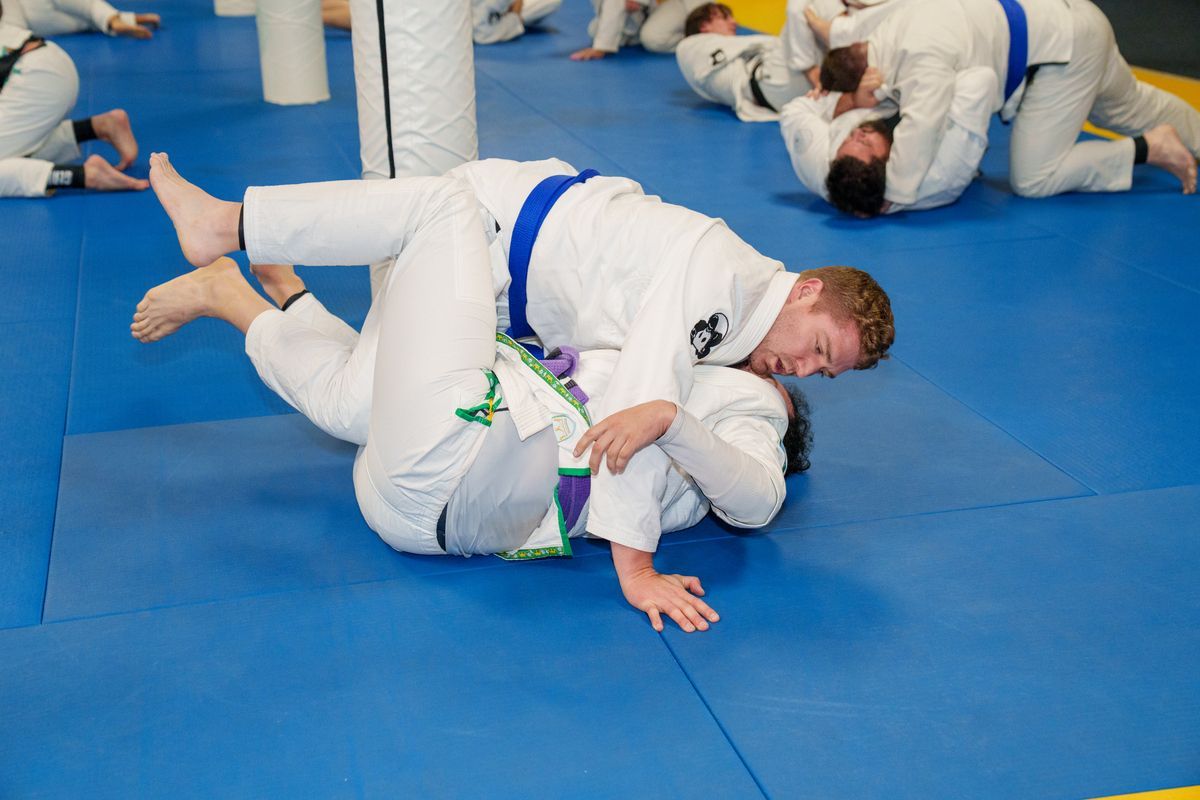
If you want cardio that actually feels useful, the mats deliver intensity, skill, and measurable endurance gains.
Brazilian jiu jitsu is one of the few workouts where you can forget you are “doing cardio” and still walk out with your heart thumping, your lungs working, and your stamina quietly improving week after week. That is because the training isn’t a long, steady jog. It is repeated bursts of effort, short recoveries, and then another round where you have to think under pressure.
In our Bethlehem martial arts community, we see a lot of people who are tired of starting and stopping fitness routines. What tends to stick is training that feels purposeful and social, with a clear path forward. On the mats, you can track progress in real time: you recover faster between rounds, you stay calmer under a heavy top position, and you stop “gassing out” when you scramble.
If your goal is better cardio and real stamina, we’re going to show you how to use class structure, smarter pacing, and a few simple metrics to turn brazilian jiu jitsu into one of the most effective conditioning tools you’ll ever do.
Why brazilian jiu jitsu builds cardio differently than steady-state workouts
Most people think cardio means maintaining the same pace for a long time. That helps, but it’s not the whole picture. In brazilian jiu jitsu, you cycle through spikes of high intensity that push your heart rate up quickly, followed by brief windows where you recover while still moving and thinking.
Physiology-wise, that mix matters. Intermittent, high-effort training improves aerobic capacity, circulation, and overall heart efficiency. With consistent practice, many students notice changes that show up outside the gym too, like improved resting heart rate and better day-to-day energy. You’re not just getting “in shape,” you’re training your body to handle stress and return to baseline faster.
Another advantage is that the work is full-body. Your legs drive your bridges and guard retention, your core stabilizes every frame, and your grip and pulling muscles stay active for long stretches. That combination builds cardiovascular fitness and muscular endurance at the same time, which is a big reason people often feel “mat fit” in a way that running alone doesn’t always create.
The stamina equation: skill plus efficiency equals longer rounds
Cardio matters, but skill is the multiplier that most beginners do not expect. Early on, you might burn energy in places that do not help, like squeezing every grip, holding your breath, or trying to explode out of positions that have no space. Then you feel like your conditioning is “bad,” when really your efficiency is still developing.
As technique improves, stamina improves even if your workouts outside class do not change. You learn when to relax, how to use frames instead of pure strength, and how to move your hips instead of muscling your arms. It’s not magic, it’s mechanics, and it is one of the best parts of training: better jiu jitsu literally makes you less tired.
We coach this intentionally. You’ll hear reminders about posture, head position, and breathing because those details keep your heart rate from unnecessarily spiking. Over time, your body learns what “hard work” should feel like and what “wasted effort” feels like, and that’s when your stamina really jumps.
What a “cardio-focused” class actually looks like on the mats
A good session isn’t just endless sparring until you collapse. The best cardio gains come from the right balance of technical work, drilling, and live rounds, because each part hits your energy systems differently.
Warmups that prepare your lungs and joints
Warmups should do more than make you sweat. We use movement that opens the hips and shoulders, increases circulation, and gets you breathing steadily before intensity rises. The goal is to arrive at the first drill already warm, not already exhausted.
Technique and drilling that keep you moving
Drilling often looks calm, but it is sneaky conditioning. Repeated reps build timing, and timing reduces panic during live rounds. Drills also let you practice continuous movement without the “all out” tension that causes early fatigue.
Live rolling that pushes real cardiovascular demand
Rolling is where the heart rate climbs the highest. Shorter rounds with controlled intensity can produce strong cardio adaptations, especially when you focus on posture, breathing, and smart escapes. Over weeks, you’ll notice faster recovery between rounds, which is one of the clearest signs your conditioning is improving.
How to pace yourself so you don’t gas out (and still get fitter)
A common mistake is treating every second like a sprint. That feels tough, but it often caps your progress because you spend too much time redlining and not enough time learning.
Instead, aim for controlled intensity. Push hard during moments that matter, like finishing a pass, defending an armbar, or escaping a pin. Then settle back into efficient movement. This teaches your body to recover while active, which is exactly what better stamina looks like.
Here are a few pacing cues we teach that keep you working without burning out:
- Breathe through your nose when you can, and exhale during effort instead of holding your breath
- Loosen grips when you’re safe, especially if you’re clamping just to “feel secure”
- Build frames first, then move your hips, then stand or turn in, instead of thrashing
- If you’re stuck, create one small improvement at a time rather than one huge explosion
Over time, you’ll roll longer with less panic, and your cardio will improve because you’re spending more minutes doing meaningful work.
Metrics that show your cardio is improving (even before it “feels” better)
Sometimes you feel tired even while your fitness is improving, especially if you’re learning new positions. That’s why simple metrics help. You don’t need lab testing to see progress.
We recommend tracking:
- Resting heart rate once per week, same time of day
- How quickly your breathing normalizes after a round (try one minute as a benchmark)
- How many rounds you can roll while staying technical, not just surviving
- Heart rate variability if you already use a wearable and want a recovery signal
Students often notice improvements within a few weeks of training two to three times per week. Better circulation, lower blood pressure trends, and increased stamina can show up surprisingly fast when practice is consistent and recovery is respected.
Do you need extra running or cycling for better cardio?
For many people, brazilian jiu jitsu alone creates a big conditioning jump, especially at the beginner and intermediate stages. The intensity is real, and the calorie burn can be significant. It also builds muscle endurance and mobility in the same session, which makes it efficient.
That said, some students like adding low-intensity aerobic work, such as easy jogging, cycling, or brisk walking. This can support recovery and build a wider aerobic base, which helps you bounce back between hard rolls. The key is not doing so much extra that you arrive to class already tired.
A simple rule we like: let jiu jitsu be your main high-intensity work, and keep any extra cardio easy enough that you could hold a conversation. If your resting heart rate is climbing week over week, or your legs feel heavy every session, you may be doing too much.
A simple 4-week progression plan to build stamina safely
If you’re new, the fastest way to improve cardio is not “more pain,” it’s steady exposure with good coaching and enough recovery. Here’s a straightforward plan that works well for people starting brazilian jiu jitsu in Bethlehem PA.
1. Week 1: Attend two classes, focus on breathing and learning positions, roll lightly if offered
2. Week 2: Attend two classes, add one or two short rounds of controlled rolling
3. Week 3: Attend three classes if your recovery is good, keep intensity moderate, prioritize technique
4. Week 4: Maintain two to three classes, increase total rolling time gradually, not all at once
If you want a little extra, add one “rebound” session weekly: light movement, positional drilling, and deliberate breathing work. It sounds almost too gentle, but it helps your body adapt without stacking fatigue.
Why this training supports stress resilience and real-world stamina
Cardio isn’t only about the heart. It’s also about staying calm when your body is uncomfortable. Rolling teaches you to manage adrenaline, keep breathing, and make decisions when your lungs are burning. That translates to daily life more than people expect.
In a working city like ours, plenty of students juggle demanding jobs, family schedules, and the mental load that comes with both. The mats give you a focused hour where the “noise” quiets down. You leave physically tired, yes, but often mentally clearer. That stress relief component is one reason people stick with training long enough to see major fitness changes.
And because training is social, you also get accountability without the awkwardness. You show up, you train, you laugh about the rough rounds, and you come back. Consistency is what builds cardio, and community is what makes consistency easier.
Take the Next Step with Inverted Gear Academy
If you want conditioning that doesn’t feel like mindless mileage, our brazilian jiu jitsu program is built to develop both performance and fitness in a structured, beginner-friendly way. You’ll build cardio through smart drilling, progressive rolling, and coaching that helps you pace yourself so your stamina improves without constant burnout.
At Inverted Gear Academy in Bethlehem, PA, we keep training practical and welcoming, whether your goal is to feel healthier, roll more rounds without gassing out, or simply find a Bethlehem martial arts routine you can actually maintain.
Build strong fundamentals, sharpen your technique, and join a free martial arts trial class at Inverted Gear Academy.