Learn a handful of core skills first, and your first month on the mats starts to feel a lot less overwhelming.
Starting Jiu-Jitsu can feel like drinking from a firehose, especially in your first few classes. There are new terms, new positions, and a new kind of physical problem-solving that most people have never done before. The good news is you do not need to learn everything at once to make real progress.
Our approach in Bethlehem is simple: we help you build a foundation you can actually use. Jiu-Jitsu works best when you prioritize a few essential skills, drill them with intention, and then practice applying them in a safe, structured environment. That is how beginners gain confidence fast, even without an athletic background.
Below are the five beginner skills we want you to focus on first. Master these, and everything else you learn later has a place to “stick.”
What to Expect in Your First Month of Jiu-Jitsu
In your first few weeks, progress is less about collecting techniques and more about learning how to move, think, and stay composed. You will practice a small set of movements repeatedly, get coaching on details you did not know mattered, and slowly start recognizing patterns during live rounds.
A typical class includes a warm-up, a technique section, and a chance to practice with a partner. Sometimes that practice is structured drilling, and sometimes it is controlled sparring where you try to apply what you learned. If you are brand new, we keep expectations realistic: you are here to learn, not to “win.”
If you are wondering about gear, start simple. For many beginners, basic athletic wear is enough for an introductory session, and we will guide you on what you need next based on whether you train gi, no-gi, or both. When you check the class schedule page on the website, you can also see how classes are organized so you can plan your week without stress.
Skill 1: Staying Calm and Breathing Under Pressure
The first skill is not a sweep or a submission. It is the ability to keep breathing when you feel pinned, squeezed, or stuck. Beginners often hold their breath without realizing it, and that single habit makes everything harder: your muscles tense up, your decisions get rushed, and your technique falls apart.
We coach you to slow down and “buy time” with calm breathing. In Jiu-Jitsu, time is a resource. When you can stay relaxed under pressure, you can feel what is happening instead of reacting blindly. That is when you start noticing openings, frames, and the small shifts that create space.
Here is a practical cue we use: exhale on effort. If you are bridging, shrimping, or framing to make space, do not clamp down and strain while holding your breath. A steady exhale keeps your movement smoother and often more powerful. It also helps you avoid the classic beginner mistake of burning out in the first minute.
Skill 2: Building Base and Balance So You Stop Getting Tipped Over
Balance in grappling is different from balance in everyday life. On the mats, someone is actively trying to knock you off your base, pull you into them, or redirect your weight. Beginners usually fall because their posture and feet (or knees) are not supporting their center of gravity.
We teach you to build a “triangle” of support, whether you are standing, kneeling, or moving around someone’s guard. That triangle shifts as you move. If your weight drifts outside it, you become easy to sweep. If your hips are too high or your knees are too narrow, you feel unstable even when you are trying hard.
In class, we drill base through simple, repeatable movements: how to widen your knees at the right time, how to post with your hands without getting overextended, and how to keep your hips connected to the position. It is not flashy, but it changes everything. Once your base improves, you can apply techniques without constantly resetting.
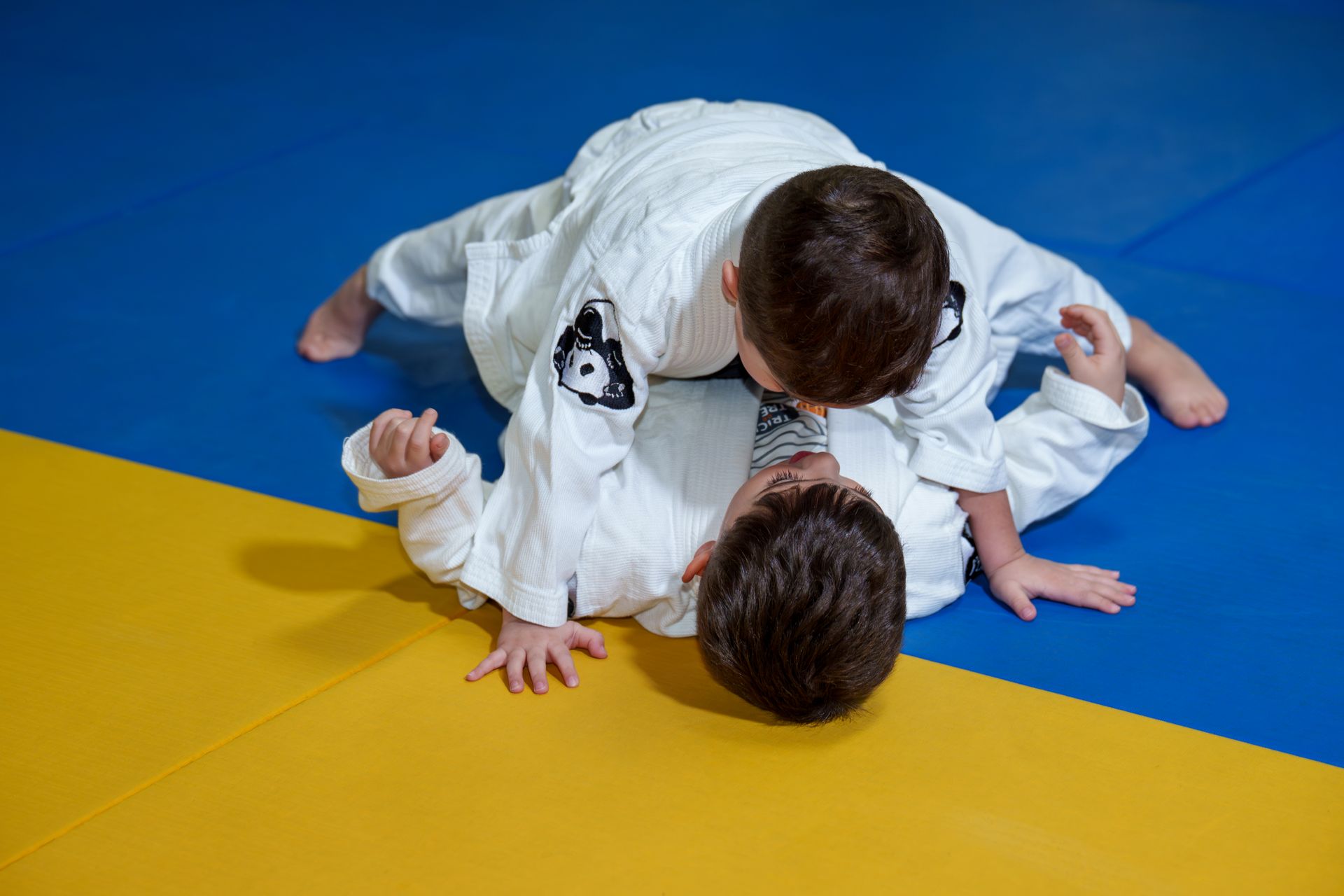
This skill matters for both Adult Jiu-Jitsu in Bethlehem PA and for kids who are still learning coordination. Good base helps adults stay safe as intensity increases, and it helps younger students build body awareness without feeling lost.
Skill 3: Posture and Grip Control (The Quiet Superpower)
Posture is how you carry your spine and hips so you can apply pressure, defend yourself, and stay mobile. Grips are how you connect to your partner so your posture actually matters. When beginners struggle, it is often because posture and grips are missing, so every position feels like slipping on ice.
In the gi, grips can include sleeves, collars, and pant legs. In no-gi, grips become frames, underhooks, wrist control, and head position. The principle is the same: you want connections that let you control distance. Too far away and you cannot pressure. Too close without structure and you get pulled forward or off-balanced.
We teach beginners to think in three distances:
- Outside distance, where you are safe but cannot attack yet
- Middle distance, where grips and frames decide who controls the exchange
- Inside distance, where posture and hip positioning prevent you from getting folded or pinned
A simple example is inside someone’s closed guard. If your posture collapses, you will spend the whole round defending. If your posture is tall with a strong base and purposeful grips, you can open, stand, or begin passing with much less panic. This is one of those details that feels almost boring on day one, then suddenly becomes the reason your rounds go better on day thirty.
Skill 4: Escaping Bad Positions Without Spiking Your Stress
Escapes are the first “wins” most beginners get in Jiu-Jitsu, and we want you collecting those wins early. You do not need to be a submission expert to feel progress. You need the ability to get out of mount, side control, and back control using safe mechanics.
We focus on a few reliable principles that show up across many escapes. First, you protect your neck and arms so you do not hand someone an easy finish. Second, you make frames with your forearms and hands to create space, not with brute pushing but with structure. Third, you move your hips, because hips are the engine of most escapes.
Here is what we want you thinking about when you are stuck:
1. Build frames that stop the pressure from collapsing your chest and head position
2. Shrimp your hips to recover space instead of trying to bench-press someone off you
3. Re-guard or get to your side, because flat backs are where escapes go to die
4. Reset your breathing and repeat, because escapes often take more than one attempt
We also teach you when to stop fighting the wrong battle. If someone has a strong pin, you might not “explode” out immediately, and that is fine. Your goal is to improve your position step by step. Small improvements add up, and they keep you safer.
For parents asking about Youth Jiu-Jitsu Bethlehem PA, this escape-first mindset is especially helpful. Kids learn that being in a bad spot is not a disaster. There is always a next action, and that lesson translates to confidence off the mats too.
Skill 5: One Reliable Submission and One Reliable Guard Pass
Beginners often want a big menu of techniques, but a big menu creates indecision. We prefer a tighter plan. If you can pair one dependable submission with one dependable pass, you can build a “game” that works in live rounds, even while you are still learning the basics.
A reliable beginner submission is usually one that rewards correct position. Think of something you can apply when you have control, not something that requires perfect timing from chaos. Likewise, a reliable guard pass is one you can repeat and troubleshoot, not one you only hit when your partner makes a huge mistake.
When we teach this concept, we are also teaching decision-making. You start to recognize: “I am in guard, so my job is to pass.” Or, “I have side control, so my job is to stabilize and look for the submission that fits.” That clarity reduces the mental noise that overwhelms new students.
Your first month does not need to be fancy. It needs to be consistent. When you drill the same pass and the same finish, you start noticing tiny improvements: your hips are lower, your grips are smarter, your pressure is steadier. Those are real milestones in Jiu-Jitsu, and they show up faster than most people expect.
Why Focused Drilling Makes Beginners Improve Faster
There is a reason we emphasize repetition. In grappling, your body has to learn timing, balance, and pressure, not just ideas. Drilling gives you the reps to build those skills without the chaos of full sparring.
Focused drilling also makes feedback more meaningful. If you repeat a movement five to ten times with a clear goal, you can actually adjust something and feel the difference. Maybe your elbow was flared, your head was too low, or your hips were disconnected. Fixing one small detail during drilling can save you months of frustration later.
We also like drilling because it keeps training approachable. You can work hard without feeling like you are constantly “surviving.” Over time, that steady practice builds the conditioning you need, but it starts with learning how to move efficiently. Technique first, intensity second.
A Beginner Checklist Before You Walk In
If you want your first class to go smoothly, a little preparation helps. Here is what we recommend:
- Arrive a few minutes early so you can settle in, meet the coach, and ask quick questions
- Bring water and something simple to train in, and we will help you sort out gear later
- Trim nails and remove jewelry, because safety details matter in close-contact training
- Come in with one goal, like learning how to shrimp or how to frame, not ten goals
- Expect to feel awkward at times, because new movement patterns take a little time
Most importantly, give yourself permission to be new. Everyone starts somewhere, and Jiu-Jitsu is a long game in the best way.
Ready to Begin
Building beginner skill in Jiu-Jitsu is about learning calm under pressure, stable movement, smart connections, and a simple plan you can repeat. When those pieces click, training gets more fun and a lot more productive, because you are no longer guessing what to do next.
That is exactly what we focus on at Inverted Gear Academy in Bethlehem, PA, right at 1114 W Broad St, serving the Lehigh Valley with structured classes for both adults and kids. If you are ready to start, we will meet you where you are and help you build these five essentials one solid session at a time.
Continue your martial arts journey beyond this article by joining a class at Inverted Gear Academy.