You do not need more hours in your week to get better, you need a plan that makes minutes count.
Busy schedules are real in Bethlehem. Between commutes, school drop-offs, shift work, and the never-ending list of errands, fitness can start to feel like another task you are failing to “keep up with.” We get it, and we plan for it.
That is why we coach Jiu Jitsu with a practical mindset: consistent, repeatable training that fits into your life instead of taking it over. When you train with intention, a short session can be surprisingly productive, and you can walk back out the door feeling sharper than when you came in.
In this guide, we will show you quick workouts you can do at home or in the gym, how to structure training when time is tight, and what to expect when you jump into classes here in Bethlehem.
Why Jiu Jitsu works when your calendar does not
Jiu Jitsu is not just “go hard until you are exhausted.” The real progress comes from skill acquisition, and skills improve best through focused repetition. If you only have 30 to 45 minutes, we can still train something meaningful: a specific escape, a sweep series, or a positional goal that keeps you honest.
Short sessions also make recovery easier. When your week is packed, you do not want training that wipes you out for two days. You want something you can return to again and again, because consistency is what compounds.
And there is a mental benefit that busy adults notice quickly: training forces you to be present. For a little while, you are not answering email in your head. You are solving a physical puzzle with immediate feedback, which can feel oddly refreshing.
Our time-smart approach: drill first, then pressure test
If you have ever tried to “just roll” your way into shape, you probably learned the hard way that random sparring can be fun but inefficient. We build classes around a structure that respects your time.
Focused drilling that actually sticks
We emphasize drilling because it is the fastest path from “I saw that technique once” to “I can do it under pressure.” Repetition builds timing, and timing is what makes Jiu Jitsu feel effortless later.
A typical technical segment includes a clear breakdown, key details that matter (not ten variations you will forget), and enough reps that you can feel the movement becoming yours. When you only train a few times a week, that kind of clarity matters.
Controlled sparring, not chaos
We also include controlled sparring so you can pressure test what you drilled. This is where you learn pacing, decision-making, and composure. It is also where your conditioning improves without needing a separate “cardio plan,” which is nice when your schedule is already full.
For many busy adults, our sweet spot recommendation is 2 to 3 sessions per week. That cadence is frequent enough to build momentum, but realistic enough to maintain.
The 10 minute warm-up you can do anywhere
You do not need a full home gym to build Jiu Jitsu movement quality. You need a small patch of floor, a timer, and just enough focus to not scroll your phone between sets.
Use this as a quick stand-alone workout or as a primer before class:
• Hip escape reps: 2 minutes total, alternating sides, smooth and controlled
• Technical stand-ups: 2 minutes, step back into a balanced stance each rep
• Shoulder bridge to hip heist: 2 minutes, focus on driving through your feet
• Plank to side-plank switches: 2 minutes, keep ribs tucked and breathe
• Shadow grappling: 2 minutes, visualize frames, grips, and angles
This is not meant to smoke you. It is meant to make your body feel like it remembers how to move on the mat.
Quick Jiu Jitsu workouts for busy adults in Bethlehem
When you are juggling work and family, the best workout is the one you will actually repeat. We like “micro-sessions” that target one theme at a time. Keep them short, track them, and rotate themes through the week.
Workout A: Escape focused (15 to 20 minutes)
Pick one escape pattern and make it automatic. Escapes are the highest return skill for beginners, and they stay valuable forever.
1. 3 minutes: hip escapes and bridges (light warm-up)
2. 8 minutes: positional reps starting from a pinned position, reset each time
3. 4 minutes: timed rounds where your only goal is to recover guard
4. 1 to 2 minutes: slow breathing, note what failed first
If you can get good at escaping, everything else becomes less stressful, including sparring.
Workout B: Guard retention and frames (20 minutes)
Busy adults often feel “stuck” because they give up position too easily. Guard retention is not flashy, but it keeps you safe and gives you time to think.
• 5 minutes: frame placement practice, elbows in, strong structure
• 10 minutes: retention reps, recover your guard after your partner clears a leg
• 5 minutes: light positional sparring, start in open guard and reset often
You are training the habit of not panicking, which is useful on and off the mat.
Workout C: Top control efficiency (20 to 30 minutes)
If you want a workout that also feels like strength training, top control is it. You will build pressure, balance, and endurance without trying to “muscle” techniques.
• 5 minutes: movement warm-up, knee slides, side-to-side transitions
• 10 minutes: pass-to-pin reps with a clean reset
• 5 to 10 minutes: timed rounds where you hold position while your partner moves
Top control teaches patience, and patience is a skill.
What you can accomplish with 2 to 3 sessions per week
People sometimes assume that training less means progressing slowly. In reality, training 2 to 3 times weekly with intention can produce steady results, especially when you show up consistently.
With that schedule, you can expect to:
• Learn fundamental positions and how they connect, instead of memorizing random techniques
• Build cardio that feels practical, because it is tied to movement and problem-solving
• Improve confidence through competence, not hype
• Develop a routine that does not burn out your knees, shoulders, or motivation
• Actually remember what you learned last week because you trained it with repetition
If you can add a short at-home movement session on one off-day, even better. But we would rather you do less and stay consistent than do too much for two weeks and disappear for two months.
Youth training that fits family schedules in Bethlehem
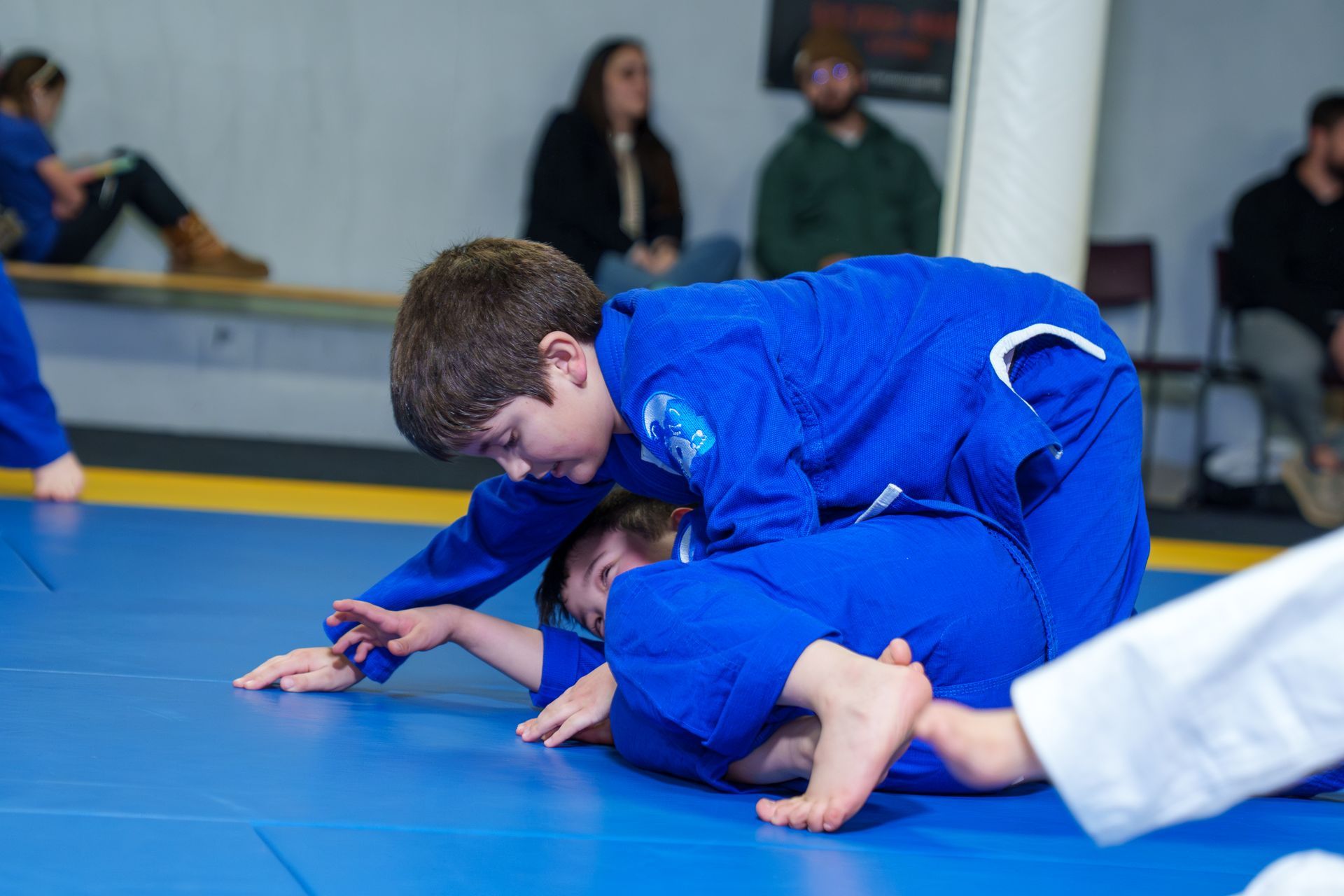
For families, time is its own kind of chaos. Our kids program is designed to be structured, upbeat, and age-appropriate, so your child learns real skills in a way that keeps them engaged.
In Youth Jiu Jitsu Bethlehem PA families often tell us they want three things: a positive environment, clear coaching, and classes that feel worth the drive. We build classes around movement games, positional drills, and simple objectives that let kids experience progress quickly.
When we teach Brazilian Jiu Jitsu for youth, we focus on body awareness, balance, and safe partner work. Kids learn how to follow directions, solve problems, and keep going after small mistakes. That last part matters more than people realize.
What your child will experience in class
We keep the tone encouraging and the instruction clear. A typical class includes:
• A warm-up with games that build athletic movement and coordination
• Technique taught in bite-sized pieces, then practiced with a partner
• Positional drills that make the technique feel real, not theoretical
• Positive reinforcement that helps kids stay focused and respectful
• A clear end-of-class wrap-up so kids leave feeling successful
For busy parents, it helps to know there is a plan each day. You are not dropping your child into randomness. You are plugging them into a process.
Making training easier when you are tired, stressed, or short on time
Life does not always cooperate with your goals. That is not a character flaw, it is just life. We coach a few simple strategies that make training more sustainable.
Set a minimum, not a maximum
Instead of promising yourself you will train five days a week, set a minimum you can keep even during a hectic month. For many people, that minimum is two classes weekly. Once that habit is stable, adding a third session feels natural.
Pack your gear like you mean it
It sounds silly, but it works. Keep your gear ready so you do not negotiate with yourself at 5:30 pm. If your bag is packed, you are halfway out the door already.
Train with a theme
When you show up with a theme, you waste less time. Your theme might be “recover guard,” “stay calm under pressure,” or “win the first grip.” Busy schedules love themes because themes create focus.
What to expect when you come in for your first class
If you are new, you do not need to be “in shape” first. You come as you are, and we build from there. Wear comfortable clothes, show up a little early, and we will help you get oriented.
Adult classes typically include a warm-up, a technical section with detailed coaching, drilling, and controlled sparring. If sparring feels intimidating, we can scale intensity and guide you through how to participate safely and productively.
The best first goal is simple: show up, learn how to move, and leave with one thing you can repeat next time. That is how Jiu Jitsu progress actually happens.
Take the Next Step
If you want a training routine that respects your schedule and still gives you real skill development, we built our programs to deliver exactly that. At Inverted Gear Academy in Bethlehem, we focus on focused drilling, repetition, and consistency, because those are the levers that help busy adults and families improve without living at the gym.
Whether you are looking for a practical workout, a challenging new skill, or Youth Jiu Jitsu Bethlehem PA families can count on, we will help you plug into a simple rhythm and keep it going.
Take what you learned here and apply it on the mats by joining a Brazilian Jiu-Jitsu class at Inverted Gear Academy.