Jiu Jitsu is the rare workout that builds your body and your confidence at the same time, one problem-solving round at a time.
If you want to get stronger, most advice sounds the same: lift, run, repeat. But if you have ever tried to stay consistent with a routine that feels like a chore, you already know the real issue is not knowledge, it is follow-through. We see a different pattern when adults start Jiu Jitsu: the training is so interactive and mentally engaging that people actually stick with it, and that consistency is what changes strength, energy, and self-belief.
In Bethlehem, life can be busy in a very specific way: work schedules, family commitments, and the daily mental load. Jiu Jitsu gives you a focused hour where your brain cannot stay on your inbox. You have to be present. You learn to breathe under pressure, solve problems with your body, and walk out feeling like you did something real.
This article breaks down how Jiu Jitsu develops full-body strength, supports fat loss and conditioning, and builds confidence that shows up beyond the mats. We will also explain what to expect in class, how our training stays beginner-friendly, and how to use the class schedule without overthinking it.
Why Jiu Jitsu Builds Practical Strength Faster Than You Expect
Strength in Jiu Jitsu is not just about moving weight in one direction. It is about controlling your posture, protecting your balance, and generating force while someone is actively trying to disrupt you. That combination creates a kind of athletic strength that feels useful in everyday life, not just in the gym.
A typical class asks your whole body to work at once. Your legs drive pressure and stability. Your core connects your hips to your shoulders so you can bridge, rotate, and keep your posture when you are tired. Your back and arms work together for pulling, framing, and grip fighting. Even your hands and forearms get trained constantly because gripping and hand positioning are part of almost every exchange.
Many adults notice their grip strength first. You feel it when you carry groceries, open jars, or do yardwork. Then you notice your posture improving, because Jiu Jitsu punishes sloppy alignment in a gentle but very honest way. When you learn to keep your spine stacked and your hips engaged, you carry yourself differently.
The muscles Jiu Jitsu hits in a real class
Here is what we see developing quickly when you train consistently:
• Core and hips from bridging, shrimping, guarding, and holding posture under pressure
• Legs and glutes from base, takedown entries, standing balance, and passing positions
• Back and lats from pulling, framing, and maintaining strong shoulder positioning
• Arms and forearms from grips, underhooks, and controlled finishing mechanics
• Neck and upper back from learning safe posture and resisting collapses in clinch ranges
• Cardio and endurance from repeated effort cycles that feel a lot like HIIT
That list is not meant to sound technical. It is simply the reality of grappling: you cannot hide a weak link for long, and training turns those weak links into strengths.
Conditioning and Calorie Burn Without a Boring Routine
One reason adults keep coming back is that each round is different. You are not staring at a timer while counting reps. You are reacting, adjusting, and learning. That mental engagement matters because it helps you train consistently, which is where conditioning and body composition changes actually come from.
Jiu Jitsu classes commonly burn around 500 to 1000 or more calories depending on intensity, body size, and how much sparring you do that day. But the bigger win is the kind of conditioning you build: repeated bursts of effort, brief recovery, then another burst. That pattern closely resembles interval training, and it translates well to real-life stamina.
If weight loss is on your mind, the best approach is simple: train, recover, and stay steady. Jiu Jitsu can help you build lean muscle while reducing fat because you are strengthening your whole body and elevating your heart rate at the same time. The key is showing up often enough that your body adapts, and keeping the pace appropriate for your current fitness level. We coach that, because no one benefits from burning out in week two.
Self-Belief Is a Skill, and Jiu Jitsu Trains It
People talk about confidence like it is a personality trait. In our experience, confidence is built through evidence. You gain self-belief when you do hard things, repeatedly, and you can point to progress that is undeniable.
Jiu Jitsu creates those moments in a very practical way. You learn a technique. You try it against resistance. It fails, because that is normal. You adjust. One day, you hit it cleanly. Then you hit it again. That loop does something powerful to your mindset. You start to trust your ability to learn under pressure.
The confidence is not loud. It is quiet and stable. It looks like staying calm in uncomfortable positions. It looks like making decisions when you are tired. It looks like realizing you can handle more than you thought, without needing to prove anything to anyone.
Problem-solving under pressure carries over
We hear the same themes from adult students again and again:
• Work stress feels more manageable because you practice staying composed while uncomfortable
• Anxiety drops because your brain gets a real reset, not just distraction
• Focus improves because you spend time doing one thing at a time with full attention
• Discipline builds naturally because progress rewards consistency, not hype
• Resilience grows because you learn to lose small rounds safely and keep going
That is the mental side of Bethlehem martial arts that people do not always expect. Jiu Jitsu is physical, yes, but it is also a training ground for composure.
What a First Class Feels Like for Adult Beginners
If you have not trained before, the first class can feel like a lot of new information. That is normal. We keep the learning process structured, and we never expect you to arrive already knowing what to do. Our job is to coach you through fundamentals, safety, and good habits from day one.
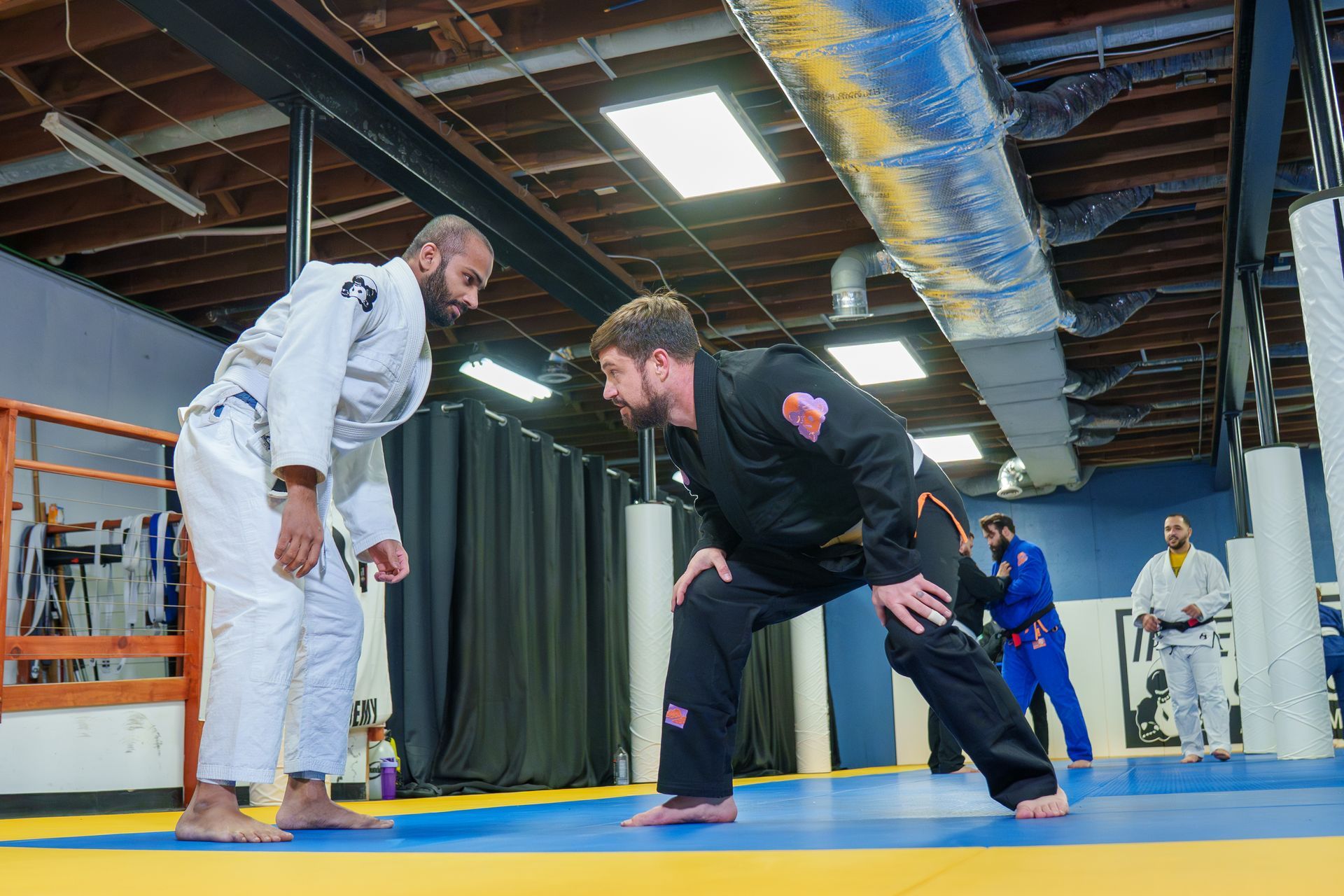
Most beginner sessions include a warm-up built around movement skills you will use in grappling, like hip escapes and technical stand-ups. Then we teach a small set of techniques with clear details. After that, you practice with a partner in a controlled way so you can build timing without chaos. Depending on the day and the class level, sparring may be optional or introduced gradually.
One thing that helps: you do not need to be in shape to start Jiu Jitsu. You get in shape by training. You can scale intensity, take breaks, and focus on learning. Over time, your conditioning catches up faster than you expect.
Building Strength Safely: How We Keep Training Sustainable
Adults have real bodies and real histories: old sports injuries, tight hips from sitting, shoulders that get cranky, or a lower back that needs respect. Sustainable training matters because the goal is not a heroic month, it is a strong year and a stronger decade.
We emphasize tapping early, controlled drilling, and smart pacing. Good Jiu Jitsu is efficient. If you feel like you have to explode every second, you are working too hard. We coach leverage, posture, and positioning so you can rely on technique instead of sheer effort.
Jiu Jitsu is also a great counterbalance to age-related decline in muscle mass, mobility, and bone density. Training later in life is not a compromise. For many adults, it is the smartest time to start because the mental health benefits and the functional strength gains are immediately noticeable.
Gi and No-Gi: Two Ways to Train, One Core Skillset
You will hear people talk about gi and no-gi like they are separate worlds. In reality, both teach the same core principles: control, posture, connection, and leverage. The differences are mostly about grips and pace.
In gi training, you wear a uniform and use cloth grips to control positions and create leverage. It can feel more methodical, and it often slows things down in a way that helps learning. In no-gi training, grips rely more on body positioning, underhooks, and head control, and exchanges can feel faster and more slippery.
If you are not sure where to start, do not overthink it. Start where the class schedule fits your life. Consistency beats perfection, and skills transfer.
A Simple Roadmap for Progress in Adult Jiu Jitsu
Many adults want to know what progress looks like, especially in the first few months. Here is a realistic path we encourage you to follow, especially if your goal is strength and self-belief, not just collecting techniques.
1. Learn the safety basics first, including tapping, posture, and how to train with control
2. Build a small set of escapes so you feel less stuck and more confident early on
3. Develop one or two reliable positions where you can slow things down and breathe
4. Add a few simple attacks that work together, so you are not guessing under pressure
5. Train consistently, review what happened in sparring, and measure progress by calmness
That last point matters. In the beginning, progress is often emotional: you panic less, you breathe better, you recover faster. Then the techniques start clicking more often, and your strength and conditioning follow.
Self-Defense That Works Because It Relies on Leverage
Jiu Jitsu is widely respected as a self-defense system because it teaches you to manage distance, control posture, and use leverage against larger opponents. That is especially valuable for adults who do not want to rely on being faster, stronger, or more aggressive than someone else.
We focus on practical mechanics: how to stay safe, how to create space, and how to control positions so you can make smart decisions. Self-defense is not about looking tough. It is about options. When you train Jiu Jitsu, you build those options through repeated practice with resistance, which is the part many people miss when they imagine self-defense training.
Adult Jiu Jitsu in Bethlehem PA: Making Training Fit Your Real Life
Bethlehem schedules can be unpredictable. That is why we keep our programs realistic for working adults. When you look at the class schedule page, you should be able to find times that work without turning your entire week upside down.
A practical approach is to pick two days you can protect most weeks, then add a third when life allows. Even two classes per week can create meaningful changes in strength, mobility, and confidence if you stay consistent for a few months. If you are aiming for faster conditioning and skill development, three to four classes per week is a solid rhythm, but it has to be sustainable.
We also encourage you to think of training as a mental reset. If you arrive stressed, you will leave lighter. Not because someone says motivational lines, but because you spent real time moving, learning, and focusing.
Take the Next Step
If you want a training method that builds full-body strength, improves conditioning, and steadily increases self-belief, Jiu Jitsu delivers in a way that is hard to replicate with standard workouts. The best part is that you do not have to arrive confident or athletic to begin, you just have to show up and keep learning.
We built everything at Inverted Gear Academy around sustainable progress for adults in Bethlehem, from fundamentals that protect your body to coaching that helps you stay consistent. When you are ready, we will help you get started with a plan that matches your goals and your schedule.
Improve your strength, endurance, and self-defense skills by joining Brazilian Jiu-Jitsu training at Inverted Gear Academy.