In Bethlehem, improving flexibility does not have to mean boring stretching routines when you can build real mobility through movement that actually feels useful.
If you have ever felt stiff getting out of the car after work or noticed your hips and shoulders do not move like they used to, you are not alone. Around Bethlehem, PA, we meet plenty of people who want better mobility but do not want another workout that leaves them grinding through the same patterns that created the tightness in the first place. That is where jiu jitsu becomes surprisingly practical.
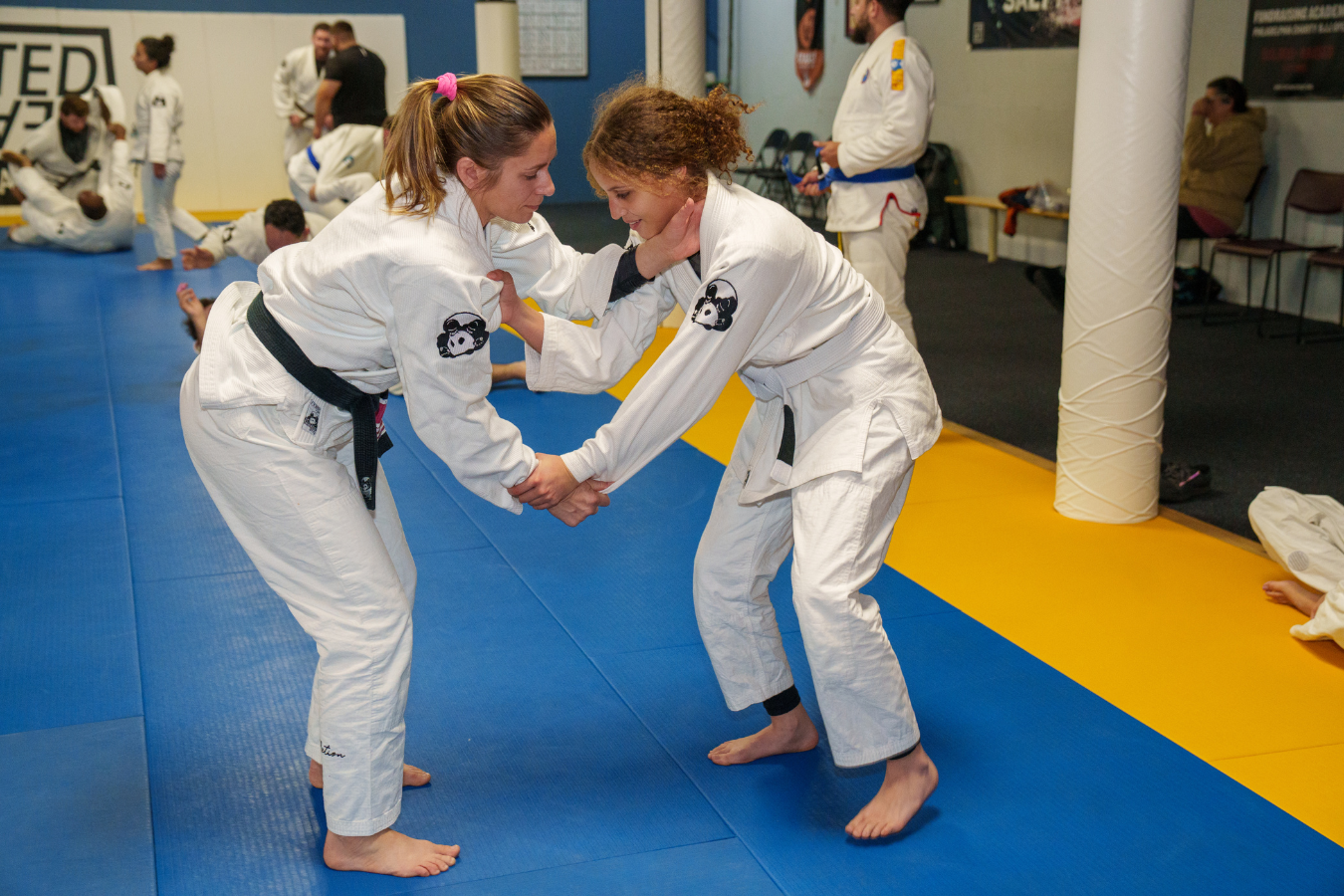
Jiu jitsu is a full body skill that asks you to move through different ranges of motion on the ground, under control, and with a partner. Instead of holding a stretch and hoping it sticks, you repeat real positions that open your hips, improve spine movement, and teach your shoulders to stay stable while they move. Over time, that combination is what most people are missing: flexibility plus usable strength.
In this article, we will break down how training supports mobility, why it tends to work even for beginners, and how our class structure in Bethlehem helps you build flexibility without feeling like you are made of rubber bands or risking avoidable injuries.
Why jiu jitsu is a mobility practice disguised as a martial art
Most people think flexibility comes from stretching longer. In practice, flexibility improves fastest when your nervous system feels safe moving through a range, and your joints have strength and control at the edges. Jiu jitsu gives you both, because you are constantly shifting angles: turning your hips to recover guard, rotating your torso to frame, extending your legs to retain distance, and posting on your hands to base.
Brazilian Jiu-Jitsu especially rewards smooth transitions. When you learn to move from guard to a sweep, or from side control to a safer frame, you are rehearsing mobility patterns with purpose. The goal is not to look flexible. The goal is to move efficiently, protect yourself, and conserve energy, and flexibility becomes a natural side effect.
Research and coaching experience line up on this point: dynamic grappling positions improve joint health and reduce injury risk when taught progressively. In other words, you are not just getting looser. You are training your body to be reliable in motion.
The specific mobility wins we see most often in Bethlehem students
Mobility can feel like a vague word, so we like to make it concrete. For most adults, the improvements show up in a few key areas that matter both on the mats and in daily life.
Hips that rotate better, not just stretch more
If your hips are tight, you will feel it in everything: squatting, sitting at a desk, stepping into a car, even sleeping positions. Jiu jitsu puts your hips through internal and external rotation constantly, particularly in guard work. Over time, hip rotation tends to improve because you practice it repeatedly, under light load, and with feedback from the position itself.
This is also why many people searching for brazilian jiu jitsu in Bethlehem PA end up caring about mobility more than they expected. The technique demands it, but it builds it in a way that feels earned.
Shoulders that get more stable as they become more mobile
Shoulders are tricky because flexibility without stability can lead to irritation. Our approach is to teach shoulder positioning and scapular control early, so your shoulders do not just move more, they move better. Think of framing, posting, and controlled pummeling as strength and alignment lessons that happen while you learn the art.
When shoulders feel safer, people naturally stop guarding movement. That is where mobility really takes off.
A spine that can rotate and flex without feeling brittle
Ground movement includes spinal rotation, controlled flexion, and extension, but always with a reason. You are turning to face your partner, bridging to create space, and learning how to keep your core engaged while you move. This supports functional mobility, the kind you notice when you twist to grab something from the back seat without that sharp, cranky sensation.
How jiu jitsu improves flexibility for beginners without forcing it
A common concern we hear is, “I am not flexible enough to start.” The good news is that beginners do not need pre existing flexibility. You need a process that respects your current range and builds it step by step.
We structure classes so you learn positions at a pace that makes sense, and we build warm ups that prepare joints for the day’s movements. Because jiu jitsu is practiced with progressive resistance, you are not thrown into maximum range on day one. You repeat manageable motions, learn to breathe, and gradually add complexity.
Most people notice small wins in the first month. It might be something simple, like sitting in guard drills without hip pinching, or standing up from the floor more smoothly. Those are mobility improvements that actually matter.
What a mobility focused class hour looks like in our program
A lot of flexibility gains come down to consistency and smart class design. While every session varies based on the lesson plan, we typically keep a rhythm that supports mobility and joint health while still teaching real technique.
Here is the basic flow we aim for in a 60 minute session:
• Warm up and movement prep that emphasizes hips, shoulders, and spine, so you feel ready rather than rushed
• Technical instruction with clear progressions, where we show the “why” behind the movement and how to protect your joints
• Partner drilling that lets you accumulate repetitions, which is where mobility becomes usable skill
• Controlled sparring or positional rounds, scaled to your experience level, to help your body adapt under realistic timing
• Cool down with breathing and targeted stretching, so you leave class feeling better than when you walked in
This structure is one reason people looking for jiu jitsu Bethlehem PA often stick with training when they have bounced off other fitness routines. The hour feels purposeful, and the mobility work is baked in, not tacked on.
Mobility, injury prevention, and why technique matters more than intensity
Flexibility is great, but not if you are collecting aches along the way. Real mobility training protects your joints because it teaches you alignment, control, and how to distribute force. In jiu jitsu, you quickly learn that muscling through a position usually fails, and it often feels rough on your body. Good technique, on the other hand, tends to feel smooth and surprisingly joint friendly.
We also pay attention to common problem areas for new grapplers: neck tension, cranky elbows from gripping too hard, and knees that complain when hip mobility is limited. By coaching better mechanics early, we help you build resilience so you can train for the long run.
This connects to what current health and performance trends are showing: many practitioners, especially over 40, are using Brazilian Jiu-Jitsu as a sustainable way to improve circulation, flexibility, and overall functional strength without high impact pounding.
Why jiu jitsu works especially well for adults over 40 in Bethlehem
Bethlehem weather, work routines, and long hours sitting can add up to stiffness. For adults over 40, mobility work has to respect recovery, and it has to deliver enough benefit to justify the time. Jiu jitsu fits because it is low impact compared to many sports, but still demanding in a way that changes your body.
We frequently see over 40 students improve:
Daily movement confidence
Once you practice getting up from the floor, shifting your weight, and controlling your balance under pressure, daily tasks feel less risky. Carrying groceries, playing with kids, moving furniture, shoveling after a PA winter storm, it all feels more manageable.
Joint friendly conditioning
Because you can scale intensity, you can train hard without always training fast. That distinction matters. You can build endurance and strength while still prioritizing clean mechanics and safe ranges.
Recovery habits that stick
We encourage students to treat mobility as part of training, not a separate chore. When it is attached to something you enjoy learning, consistency becomes easier.
The mental side: flexibility is physical, but calm is part of mobility too
There is an overlooked piece of mobility: tension. If your nervous system is stuck in stress mode, your body often stays tight. Training jiu jitsu gives you a structured way to practice problem solving under pressure, breathing when it is uncomfortable, and staying present.
Studies on BJJ communities report strong psychological benefits, including reduced anxiety for a large majority of participants, improved confidence, and better mood, with many people also emphasizing the value of community connection. We see the same thing locally. People come in wanting flexibility and leave realizing they also gained stress relief and a steady routine that feels grounding.
And yes, it is okay if you are not “a martial arts person.” Most people are not at first. You just need a beginner friendly room and a plan.
Simple ways to track your mobility progress (without overthinking it)
Mobility gains can be subtle, especially if you are used to measuring progress only by the scale or the mirror. We like practical metrics that tie directly to movement quality in jiu jitsu and outside it.
Here are a few simple markers you can use over 4 to 6 weeks:
1. You can sit in basic guard positions with less hip pinching and less low back tension
2. Your bridges and hip escapes feel smoother, with less “stuck” sensation on one side
3. You recover posture more easily after scrambling, instead of feeling folded or cramped
4. Your shoulders feel more stable when framing or posting, with fewer little tweaks
5. Getting up from the floor in daily life feels easier and more coordinated
If you train 2 to 4 times per week, these changes tend to show up faster. Consistency matters more than heroic effort, and your joints will thank you for that approach.
Getting started safely when you feel stiff right now
If you are walking in with tight hips, limited shoulder range, or an old back flare up that makes you cautious, we take that seriously. Mobility should feel challenging, but it should not feel like you are gambling with your body.
We recommend three simple steps before your first week:
• Show up a few minutes early so we can point you toward the right warm up options for your body
• Focus on controlled movement over speed, especially during transitions and ground drills
• Ask questions when something feels unclear, because small adjustments often make the biggest difference
The goal is not to “push through” stiffness. The goal is to give your body new options, one class at a time, until mobility becomes normal again.
Take the Next Step
If you want flexibility that actually shows up in your real life, jiu jitsu is one of the most practical ways to build it, especially when your training is coached with mobility and longevity in mind. At Inverted Gear Academy, we guide you through progressive movement, technical fundamentals, and safe training habits so you can get looser, stronger, and more confident without treating your joints like a disposable resource.
Whether you are looking for brazilian jiu jitsu in Bethlehem PA to move better, feel better, or simply have a skill based fitness routine you can stick with, we are ready to help you start in a way that fits your body and your schedule.
Build stronger grappling skills and refine your technique by joining an Adult Jiu-Jitsu program at Inverted Gear Academy.