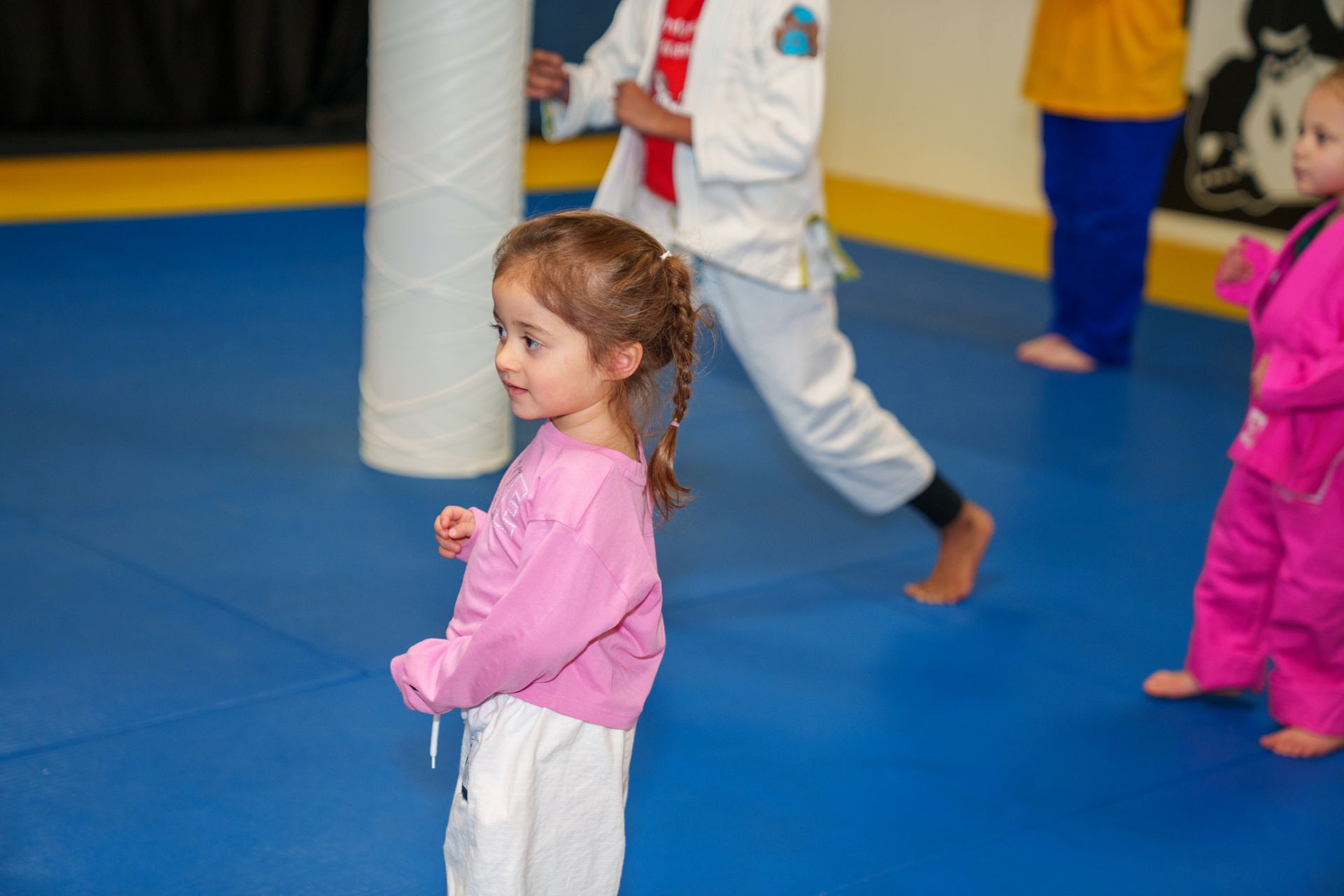
Youth jiu jitsu gives kids a place to move, focus, and grow, while giving parents a plan they can actually trust.
If you have a child with big energy, a teen who needs a confidence boost, or a student who’s tired of the social pressure that can come with school, youth jiu jitsu often clicks in a way other activities don’t. We see it every week in Bethlehem: kids who start out shy gradually speak up, kids who struggle with frustration learn how to reset, and kids who dislike “team sports culture” still find a team here.
Youth jiu jitsu is also rising fast nationwide, and not just as a trend. U.S. search interest in BJJ climbed 104.35 percent from 2004 to 2024, outpacing many traditional martial arts, and the broader market is projected to keep growing through 2033. That matters to you because growth usually brings better coaching standards, clearer youth curriculums, and more family-friendly class options, including hybrid support for busy schedules.
In this guide, we’ll break down what makes brazilian jiu jitsu for youth such a practical choice for Bethlehem families today, what you can expect from the program, and how to decide whether your child is ready to start.
Why Youth Jiu Jitsu Fits Modern Bethlehem Family Life
Bethlehem parents are juggling a lot: schoolwork, screens, packed calendars, and the real worry of kids not getting enough meaningful movement. Youth jiu jitsu offers a structured hour where your child has to be present. No scrolling, no sidelines, no waiting for the ball to come their way. It’s focused, coached, and surprisingly engaging once kids realize it feels like solving puzzles with their bodies.
Because grappling is partner-based, we also get natural opportunities to teach cooperation and respect. Kids learn quickly that training only works when partners help each other improve. That shared responsibility is one reason youth jiu jitsu Bethlehem PA families like the environment: it’s active, but it’s not chaotic.
The Benefits Bethlehem Parents Ask Us About Most
We hear a lot of the same questions from families, and the concerns are fair. You want something that’s safe, valuable, and not just “another activity.” Here’s what youth jiu jitsu consistently develops when training is age-appropriate and taught well.
Discipline that feels earned, not forced
We build discipline through small, repeatable habits: lining up, listening for cues, practicing the same movement until it gets smoother. Over time, kids start to understand that effort has a payoff. It’s not a lecture. It’s a lived experience, and you can often see it show up at home in little ways like better follow-through with routines.
Confidence built from real capability
There’s a huge difference between being told “you’re amazing” and realizing “I can handle this.” Brazilian jiu jitsu for youth is great at creating that second kind of confidence. Students learn how to stay calm in uncomfortable positions, how to escape, and how to improve step by step. When a child solves a problem on the mat, confidence becomes tangible.
Fitness that doesn’t feel like exercise
Youth jiu jitsu is a full-body workout disguised as learning. Kids build coordination, balance, grip strength, and mobility without staring at a clock. In an era where childhood obesity is a real concern, consistent movement matters, and the best program is the one your child actually wants to attend.
Resilience and emotional control
A normal class includes moments of “I got stuck,” “I tapped,” and “I tried again.” That cycle teaches resilience in a safe setting. We coach kids to breathe, reset, and re-engage with good attitude. It’s not about winning every round. It’s about learning how to respond when things don’t go your way.
What Youth Jiu Jitsu Looks Like in Real Life (Not Just on Social Media)
A lot of parents first see jiu jitsu through highlight clips, and those can look intense. In reality, youth classes are structured, supervised, and paced for learning. Most sessions include a warm-up, skill development, and controlled practice where we match partners carefully.
We also teach students to “train smart.” That means tapping early, communicating with partners, and recognizing that the goal is improvement, not domination. When kids understand that culture early, it shapes how they approach training for years.
Youth Jiu Jitsu Safety: What We Do to Reduce Risk
Is youth BJJ safe is one of the most common questions, and it should be. Grappling has inherent risk, just like soccer, basketball, or wrestling, but risk is strongly influenced by coaching, class structure, and curriculum. Our job is to keep the learning environment controlled and consistent.
Here are the safety pillars we emphasize in youth jiu jitsu:
• Age-appropriate techniques and rules that prioritize control, not force
• Clear tapping education, so kids know how to stop and how to respect the stop
• Partner matching by size, maturity, and experience as much as possible
• Active coaching during drilling and sparring, not passive supervision
• A culture where asking questions and slowing down is normal, not embarrassing
We also encourage you to tell us what your child needs. If your student has anxiety, sensory sensitivities, or prior injuries, we can usually make smart adjustments. It’s a team effort between you, your child, and our coaches.
What Age Should Kids Start Brazilian Jiu Jitsu for Youth?
Many kids can start as early as 4 to 6 if the class is built for attention span, movement basics, and fun. As kids grow, the training becomes more technical and the goal setting becomes clearer. Teens often enjoy jiu jitsu because it feels practical and mature, and because progress is measurable.
Instead of asking “What age is best,” we suggest asking:
Is your child ready for a structured class?
If your child can follow basic directions, take turns, and handle gentle correction, youth jiu jitsu can be a good fit. If focus is still a struggle, that’s not a dealbreaker, but it helps to begin with realistic expectations. Some kids need a few weeks to settle in. That’s normal.
What outcome do you want most right now?
Some families want anti-bullying confidence, some want physical activity, and some want a positive social circle. Youth jiu jitsu can support all of those, but the way we coach your child may differ depending on the goal. Tell us what matters to you so we can guide the experience.
Bullying, Boundaries, and Real Confidence at School
Parents often ask whether youth jiu jitsu helps with bullying. What we see is that kids gain better posture, clearer boundaries, and calmer reactions. That alone changes social dynamics. When a student feels less intimidated, peers notice.
We also emphasize respect and responsibility. Jiu jitsu skills are not for showing off. We frame training as a way to protect yourself and make good decisions under pressure. For many families, that balance of empowerment and restraint is the point.
Competition vs Fitness: Choosing the Right Track Without Pressure
Not every child wants to compete, and that’s fine. Youth jiu jitsu works well as a long-term activity even if your child never enters a tournament. That said, some students love competition because it gives them a clear goal and a chance to test skills in a structured setting.
We support both paths, and we keep the tone healthy. Winning is exciting, but improvement is the real target. Trends in high-level jiu jitsu shift constantly, and you might hear about things like wrestling-heavy takedowns or changing submission preferences. For youth, we keep the focus on fundamentals, safety, and a game that makes sense for their age and body type.
What You’ll Need: Cost, Gear, and How to Keep It Simple
“How much does it cost and what’s needed” comes up early, because families want clarity. The basics are straightforward: a uniform for gi classes, good hygiene, and consistency. Gear costs can be a barrier in some sports, so we try to keep entry simple and help you avoid buying unnecessary extras.
If you’re starting youth jiu jitsu Bethlehem PA training for the first time, we recommend focusing on the essentials first and letting your child fall in love with the process before you invest in anything beyond what the program requires.
How Our Youth Program Is Structured for Progress and Retention
Kids quit activities when progress feels random, when the environment feels overwhelming, or when classes are basically “free play.” We build youth jiu jitsu around clear skill tracks, so your child can feel improvement even if your schedule limits attendance some weeks.
A typical progression includes:
1. Learning core positions and movement basics so your child can stay safe and oriented
2. Building a small set of escapes and controls that work reliably against common situations
3. Adding submissions only after control and responsibility are established
4. Introducing more live practice as maturity and technique improve
5. Helping students set goals, whether that’s confidence, fitness, or competition
We also understand Bethlehem family life gets busy. When you can’t make every class, we still aim to make each session feel like it “counts,” so your child stays motivated instead of feeling behind.
Why Youth Jiu Jitsu Is Growing So Fast Right Now
Youth jiu jitsu is not just popular because it looks cool. It’s growing because it solves modern problems: kids need physical literacy, stress outlets, and real confidence. The global BJJ market is projected to rise from 1.2 billion in 2025 to 2.5 billion by 2033, and youth participation is a major driver. That growth also comes with better youth coaching education and more structured curriculums, which improves the experience for families.
We also see more schools and sports programs recognizing grappling as a legitimate complement to traditional athletics. For students who cross-train with wrestling or other sports, jiu jitsu often improves balance, spatial awareness, and composure under pressure.
Take the Next Step
The best way to understand youth jiu jitsu is to see how a well-run class feels: organized, upbeat, and focused on progress. At Inverted Gear Academy, we build each session to help your child move with confidence, treat training partners with respect, and develop skills that carry into school, sports, and everyday life.
If you’re looking for youth jiu jitsu Bethlehem PA families can rely on, we’ll help you choose a starting point that fits your child’s age, personality, and goals, and we’ll make the first steps simple and welcoming at Inverted Gear Academy.
Experience how consistent training can transform your fitness, confidence, and focus at Inverted Gear Academy.