
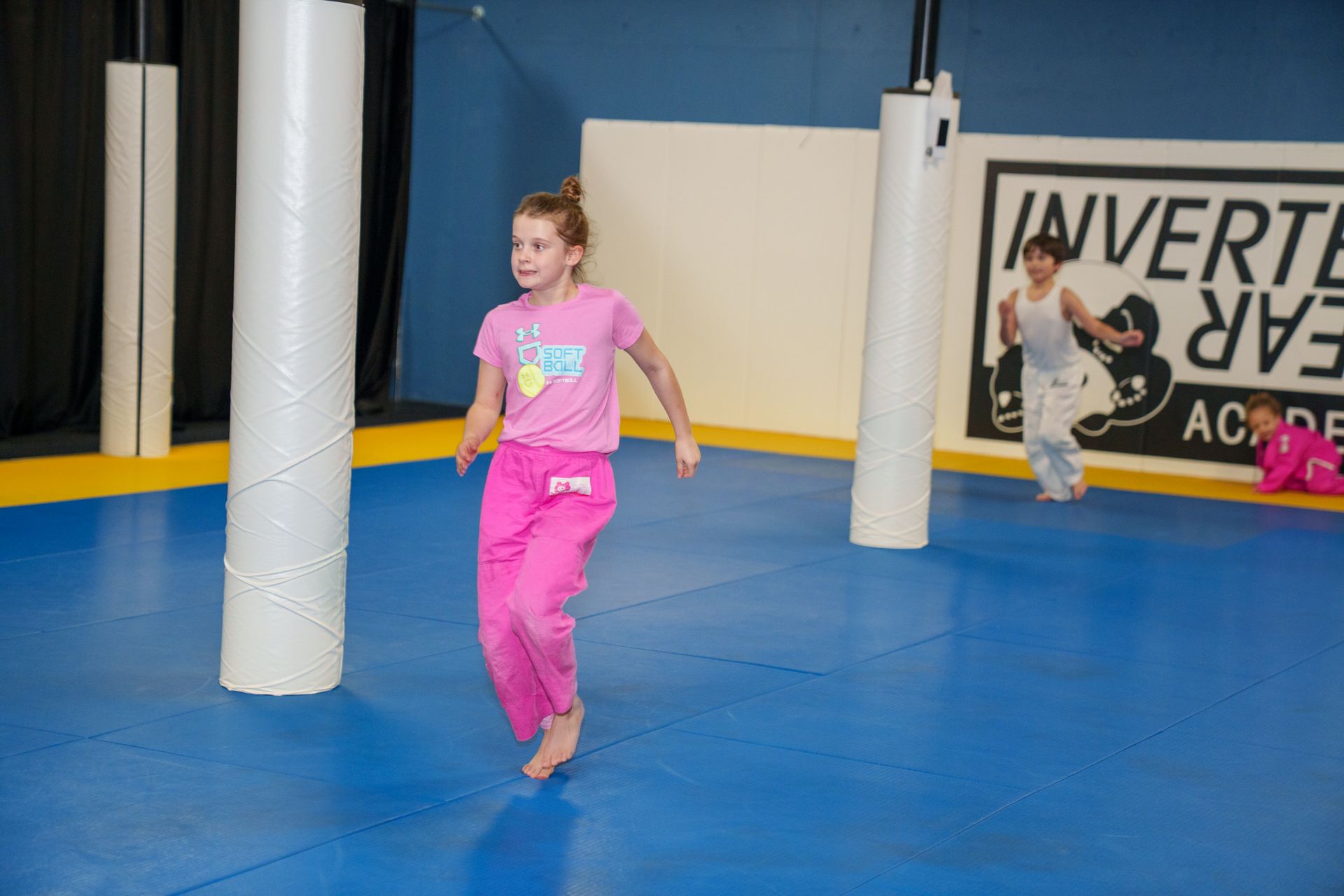
The right kind of challenge can help your child feel calmer, more capable, and more focused in everyday life.
If you are looking for an activity in Bethlehem that does more than simply burn energy, youth jiu jitsu stands out for one simple reason: progress is visible. When kids learn how to move, how to solve a problem under pressure, and how to stay composed, you can see it in how they carry themselves outside class too.
We work with kids who are naturally confident and kids who are still figuring it out. Some are chatty, some are quiet, some have trouble focusing, and some get discouraged quickly when something feels hard. Youth jiu jitsu gives all of them a structured way to practice confidence and focus, not just talk about it.
What makes this especially relevant for families here is that routines matter. School demands attention, homework demands patience, and friendships demand emotional control. Our goal is to make the mat a place where your child can build those skills in a way that feels engaging, physical, and realistic.
Why youth jiu jitsu works so well for confidence and focus
Confidence is not something we try to hype up. In our experience, it is built when kids earn small wins consistently. Focus is similar: it is trained through repetition, clear expectations, and learning to stay present even when something is uncomfortable.
Research backs up what many parents tell us after a few months of training. In a 2024 EJ Sport Journal survey, 96.4 percent of parents reported increased confidence in their kids and 78.6 percent observed improved concentration. That same survey also highlighted improvements in commitment and mental flexibility, which matters because focus is not only about paying attention, it is also about adjusting when things change.
We also like that jiu jitsu is a thinking sport. Your child is not just moving, but making decisions: where to place hands, when to shift weight, how to stay balanced, and how to respond safely. That constant problem solving builds mental habits that show up in the classroom and at home.
Confidence is earned, not handed out
One of the most powerful parts of brazilian jiu jitsu for youth is how honest it is. Techniques either work or they do not, and you learn quickly that effort plus consistency makes a difference. Kids do not need to be the biggest or fastest to improve. They need to show up, listen, try, and keep trying.
We build confidence through clear skill goals. Your child learns a movement, drills it with guidance, and then practices it in a controlled way with a partner. Over time, that process teaches a quiet kind of self-belief: I can learn hard things, I can stay calm, and I can make good choices under pressure.
That matters beyond the mat. When kids experience earned progress, they become more willing to raise their hand in class, ask for help when they need it, and try new things without shutting down the moment something feels challenging.
Belt progress helps kids see their own growth
Youth jiu jitsu gives kids a roadmap. They do not have to guess whether they are improving because the structure makes progress measurable. Stripes, belt levels, and skill milestones give kids a tangible sense of accomplishment.
There is also a long-term lesson here. Studies looking at belt progression have found that more training experience correlates with higher self-efficacy and self-control. We see that same arc in real life: the longer kids stick with training, the more composed and capable they tend to become.
Focus improves because training demands real attention
In class, attention is not optional, but it is also not boring. Kids are listening, moving, and responding. The room has a rhythm: instruction, drilling, movement practice, then more drilling. That pattern matters because focus is a skill that grows through repetition in a structured environment.
We also keep kids engaged by making lessons age-appropriate and interactive. When a child has to remember a sequence, maintain balance, and respond to a partner, the brain is working in a way that feels like a game, not like another lecture.
This is one reason youth jiu jitsu can complement school so well. Concentration improves when kids practice noticing details and staying present, especially during challenging moments. Many parents report that once their child learns how to settle in and follow steps on the mat, homework routines become less of a daily negotiation.
Self-control and calmer behavior are part of the training
We care a lot about what training teaches emotionally, not just physically. A five-month study of 113 youth participants found that jiu jitsu training increased self-control and pro-social behavior, and it even showed a decline in aggression levels among BJJ practitioners. That is a big deal for parents who worry that martial arts might make a child more aggressive.
Our classes reinforce the opposite. Kids learn to pause, breathe, and follow rules. They learn how to apply techniques with control, how to respect partners, and how to stop immediately when asked. Those habits are not just polite, they are practical life skills.
When kids practice self-control in a physical setting, it often transfers. We commonly hear that kids become better at handling frustration, taking feedback, and recovering after a tough day. It is not magic. It is a skill built through repetition.
What your child practices in class that builds confidence and focus
We keep the training environment clear, consistent, and supportive, because that is how kids learn best. A typical youth jiu jitsu class is not chaos. It is structured, but still fun, and kids know what is expected.
Here are a few key skills we intentionally train that connect directly to confidence and focus:
• Listening for details and following multi-step directions during technique instruction
• Staying calm in close contact situations and using breathing and posture to regulate emotions
• Solving problems with a partner by adjusting leverage, timing, and positioning instead of forcing strength
• Handling wins and losses with perspective, including learning how to reset after a mistake
• Showing respect through safe training habits like tapping, stopping on command, and partnering responsibly
These are the moments where parents often notice change. Not because we give pep talks, but because your child practices the same mental skills over and over until they become normal.
How youth jiu jitsu supports school and home routines in Bethlehem
Families tell us they want their child to focus better, listen the first time, and manage emotions without everything turning into a power struggle. We get it. Life is busy. And in Bethlehem, kids juggle school, sports, activities, and screens that are designed to steal attention.
Youth jiu jitsu gives kids a place where attention is trained in real time. They cannot scroll past a difficult moment. They learn to stay with it. That practice can show up as better follow-through at home, improved patience with homework, and a more even mood.
That lines up with broader findings, too. Short-term studies have shown that 12 weeks of BJJ training can decrease emotional symptoms, hyperactivity or inattention, and externalizing problems in kids. When you combine that with a consistent routine, you get a powerful foundation for focus.
A simple way to think about confidence: skill plus repetition
Kids do not become confident because an adult tells them they are amazing. Confidence grows when kids see evidence of their own ability. That is why we emphasize repetition, small improvements, and realistic goals.
We also make space for kids to be beginners. Nobody walks in knowing how to shrimp, breakfall, or keep base. When kids realize it is normal to struggle at first, they stop treating struggle like failure. That mindset shift is huge.
And yes, some kids are nervous their first week. That is normal too. We guide them through it gently, and we keep the atmosphere respectful. Over time, even shy kids often start to look forward to class because it becomes a place where they know what to do, what the rules are, and how to succeed.
Safety and structure: why parents feel comfortable with training
Parents in youth jiu jitsu Bethlehem PA programs often ask about safety first, and we appreciate that. Safety is not a footnote, it is the foundation. Jiu jitsu is largely ground-based, and that means we can teach meaningful skills without relying on high-impact collisions.
We focus on controlled training, clear partner expectations, and appropriate pacing for age and experience. We also teach kids to communicate. Tapping is a skill. Listening is a skill. Stopping immediately is a skill. When those are trained early, kids learn how to keep themselves and their partners safe.
What to expect over the first few months
Every child is different, but patterns show up. In the first few classes, many kids are simply learning the rules, the movements, and how to work with a partner. Soon after, you will often see improved body awareness and better emotional regulation, especially when kids realize they can stay calm in a challenging situation.
Here is a realistic progression we see for many kids who train consistently:
1. Weeks 1 to 2: learning class structure, basic movements, and how to be a good partner
2. Weeks 3 to 6: improved coordination, better listening, and early confidence from small technique wins
3. Weeks 7 to 12: stronger focus during drills, better frustration tolerance, and noticeable carryover at home and school
4. Month 3 and beyond: more self-directed effort, stronger self-control, and deeper confidence from earned progress
This is also why consistency matters more than intensity. Steady training builds steadier kids.
Why families choose youth jiu jitsu as a long-term activity
Youth jiu jitsu is not just a seasonal hobby. It can grow with your child from early elementary years through the teen years because the art has depth. There is always something new to learn, and kids can keep setting goals without burning out.
It also gives kids a community that values respect, improvement, and composure. That is a refreshing mix, especially in a world that often rewards shortcuts. When kids learn to work for progress, they start to trust themselves, and that trust is where confidence really lives.
Take the Next Step
If you want an activity that builds real confidence and real focus, our youth jiu jitsu program is designed to give Bethlehem kids a structured path to grow, one class at a time. We keep training practical, safe, and engaging, so your child can build skill and self-control without feeling overwhelmed.
When you are ready, we can help you choose a starting point that fits your child’s age, personality, and schedule. That is exactly what we do every day at Inverted Gear Academy, and we would love to welcome your family onto the mats.
Continue your Jiu-Jitsu journey beyond this article by joining an Adult Jiu-Jitsu class at Inverted Gear Academy.