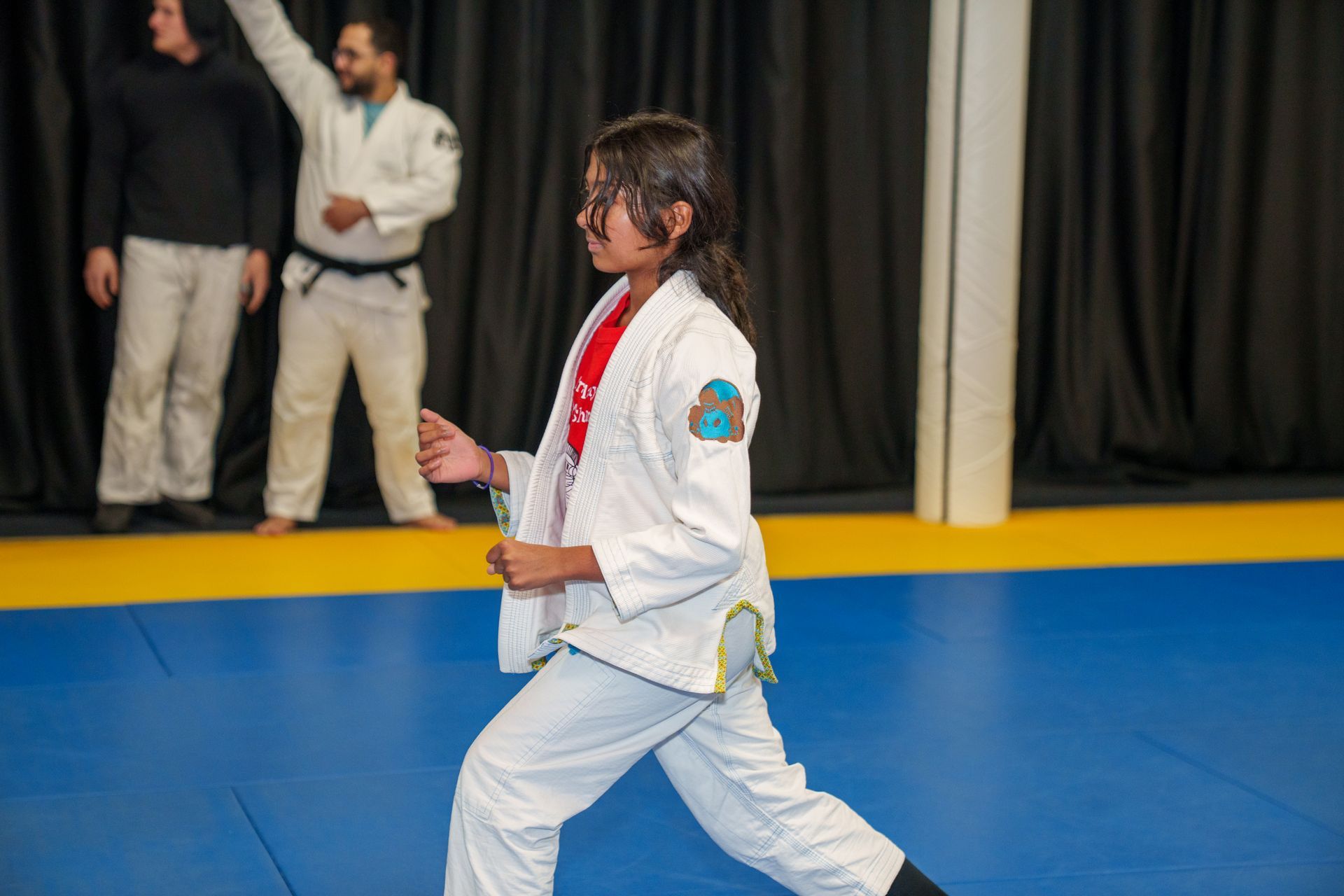
Youth jiu jitsu turns extra energy into balance, confidence, and better focus you can actually see at home and at school.
If you are looking for an activity that builds real athleticism without burning your child out, youth jiu jitsu is one of the most practical options we teach in Bethlehem. It is physical, yes, but it is also structured in a way that asks kids to listen, adjust, and try again. That combination is a big reason families tell us they notice improvements outside the mats too.
We also understand what many Bethlehem parents are up against right now: too much screen time, not enough movement, and attention that feels a little scattered after long school days. Our youth program is designed to meet kids where they are, then gradually guide them toward stronger coordination, better self-control, and calmer decision-making under pressure. It is not about turning kids into fighters. It is about helping your child feel capable in their own body.
Research backs up what we see in class every week. Even 1 to 3 weekly sessions of about 45 minutes has been linked with double-digit gains in self-control and measurable improvements in emotional regulation and focus. When kids learn to slow down, breathe, and solve a problem in real time, that skill tends to travel with them into homework, team sports, and friendships.
Why youth jiu jitsu builds better athletes than you might expect
People sometimes think of Brazilian Jiu-Jitsu as purely a grappling art, but for kids it functions like a full athletic foundation. Our classes include movement patterns that translate into better performance in just about any sport: balance, hip control, posture, grip strength, and the ability to change direction without falling apart.
A big benefit is that the training is bodyweight-based and dynamic. Kids learn to move with another person, not just around cones or across a field. That adds a layer of coordination and timing that is hard to replicate in many activities. Over time, your child starts moving more efficiently, which can reduce injury risk in other sports because awkward landings and off-balance positions become less scary and more manageable.
Athletic skills we develop in every class
We coach athleticism directly, but we do it through games, drills, and technique work that stays age-appropriate. Depending on age and experience, our youth jiu jitsu training supports:
• Stronger balance and body awareness through base, posture, and safe falling practice
• Better coordination from learning sequences like shrimping, bridging, and technical stand-ups
• Mobility and flexibility from mat movement that opens hips, shoulders, and ankles
• Functional strength built from holds, grips, and controlled resistance, not heavy lifting
• Cardiovascular endurance developed through short bursts of effort and active rest cycles
That is why families looking for youth jiu jitsu Bethlehem PA often tell us the training complements school sports like wrestling, soccer, basketball, and even baseball. The body control carries over in a surprisingly clean way.
Focus, self-control, and calmer reactions under pressure
One of the simplest ways to describe the mental side of jiu jitsu is this: your child has to pay attention, or the technique does not work. In youth jiu jitsu, kids learn to follow instructions, notice details, and make quick adjustments. We keep the tone upbeat, but we also keep expectations clear, because consistency is where the benefits show up.
Studies on youth Brazilian Jiu-Jitsu point to meaningful improvements in inhibitory control and self-regulation, including double-digit gains in self-control with steady attendance. That matters for school because focus is not just about trying harder. It is about practicing the skill of staying on task when something is frustrating or distracting.
In class, kids practice that skill constantly. A partner resists. A position feels uncomfortable. A technique fails the first time. We coach them to reset, listen, and try again. That cycle builds patience and persistence in a very hands-on way.
How this can show up at home and school
We do not promise miracles, and we do not pretend every day is perfect, but many parents notice shifts like:
• Less quitting when something feels hard
• Better ability to wait, take turns, and follow multi-step directions
• Improved tolerance for frustration during homework or chores
• More confidence speaking up, because progress is visible and earned
• Calmer reactions in conflicts with siblings or classmates
Those are not random personality changes. Those are trained responses. And that is a big reason families choose brazilian jiu jitsu in Bethlehem PA as a developmental activity, not just a sport.
Confidence without aggression: a key difference in how we teach
Parents often ask a fair question: will this make my child more aggressive? Our experience, supported by research, is that Brazilian Jiu-Jitsu tends to decrease aggression in youth when taught with structure and respect. The training is close-contact and competitive, but our culture emphasizes control, safety, and responsibility. Kids learn that strength without control is not the goal.
We build confidence through competence, not through intimidation. When your child learns how to escape a hold, regain balance, or solve a tricky position, that success feels real. It is earned through repetition. That kind of confidence usually makes kids less likely to act out, because they do not need to prove themselves the loud way.
We also use jiu jitsu to teach practical anti-bullying skills, like boundary-setting, staying calm, and finding help. While we never frame class as a place to settle scores, we do give kids tools to feel less helpless. That alone can change how a child carries themselves in the hallway, at practice, or on the playground.
What a typical youth class looks like on the mat
A youth class should feel organized, safe, and fun. Our sessions follow a consistent rhythm so kids know what to expect, which helps attention and reduces anxiety, especially for kids who struggle with transitions.
Most classes include a warm-up that is more like athletic movement practice than mindless running. Then we teach a small set of techniques with clear goals, followed by drills to build repetition. Depending on age and readiness, we add controlled sparring, often called rolling, where kids apply skills with supervision and strict rules.
Our class structure, step by step
Here is the flow you can expect when your child joins our youth jiu jitsu program:
1. Movement warm-up focused on coordination, balance, and safe falling
2. Technique instruction with a specific theme, like guard retention or escapes
3. Partner drilling with coaches correcting details and keeping it safe
4. Games or positional rounds that make problem-solving feel natural
5. Cool-down, quick review, and a reminder about respect and effort
This structure is also why 45-minute sessions can be so effective. Kids get a lot done, but the pace stays tight enough that attention does not drift for long.
Ages, readiness, and how we keep training safe
Safety is not an afterthought in youth jiu jitsu. It is built into how we group kids, how we choose drills, and how we supervise contact. We typically see kids start around ages 4 to 6, with training that focuses on movement, listening, and basic positions. As kids grow, we add complexity and intensity at a pace that makes sense for the individual.
We keep techniques age-appropriate, enforce tapping rules, and prioritize control over toughness. We also teach kids how to be good training partners, which is a life skill on its own. A child who learns to protect a teammate while still working hard is learning empathy in motion, not just in theory.
If you are wondering whether your child is ready, we usually look for a few basics: willingness to participate, ability to follow simple directions, and comfort being coached. Perfection is not required. Some kids start shy and warm up slowly. That is normal.
How often should kids train to see results?
Most families do best with consistency, not intensity. Research suggests meaningful benefits from 1 to 3 sessions per week, and we agree with that in practice. Training once a week can build familiarity and comfort. Twice a week often creates noticeable momentum. Three times a week can be a great fit for kids who truly love it and recover well.
We help you choose a schedule that supports school, sleep, and family routines. Overtraining is not the goal. Our aim is long-term development, where your child stays excited to come back and keeps improving without feeling pressured.
If you check the class schedule page, you can plan around school pickup times, homework windows, and other activities. Consistency matters more than chasing the perfect week.
Belt progression and why goals matter for kids
Kids thrive on visible progress. Belt progression in Brazilian Jiu-Jitsu provides a clear pathway: learn fundamentals, practice consistently, demonstrate understanding, and earn the next step. It is not instant gratification, which is kind of the point. The process teaches goal-setting, patience, and pride in earned achievement.
We also make sure kids understand that belts are not the only measurement. Some of the best progress looks like this: a child who used to freeze now tries an escape, or a child who used to get frustrated now takes a breath and resets. Those wins are quieter, but they are powerful.
If you want to support your child at home, ask simple questions after class: what position did you work on, what felt tricky, and what did you do when it got hard. That keeps the focus on learning, not just winning.
Support for attention challenges, anxiety, and special needs
Many Bethlehem families seek youth jiu jitsu because traditional sports do not always fit their child. The good news is that jiu jitsu can be a strong match for kids who need structure, repetition, and clear boundaries. Recent studies from 2023 and 2024 point to reduced anxiety, higher life satisfaction, and more prosocial behaviors in teens who train consistently.
We also see how Brazilian Jiu-Jitsu can support kids with autism through predictable routines, social practice, and motor skill development. Research has noted significant reductions in problem behaviors in some youth populations when training is consistent and appropriately coached. While every child is different, the combination of movement, rules, and achievable challenges can be grounding.
Our coaching style is patient and specific. We give one clear cue at a time, reinforce effort, and keep the environment respectful. If your child needs a little extra time to adjust, we can work with that.
Youth jiu jitsu in Bethlehem, PA: why local families are choosing the mats
Bethlehem is full of active kids, but it is also a place where families juggle a lot: school demands, long commutes, and the constant pull of phones and gaming. Youth jiu jitsu gives kids a real break from screens while still feeling engaging, almost like solving a physical puzzle with friends.
It also offers something many activities struggle to deliver: a mix of individual responsibility and team culture. Your child develops their own skills, but growth happens with partners, coaches, and shared respect. Over time, our academy becomes a steady point in the week, not just another drop-off.
When parents search for youth jiu jitsu Bethlehem PA, what most want is simple: a safe program that builds athleticism, focus, and confidence without drama. That is exactly what we aim to provide, class after class.
Take the Next Step
Building athletic, focused, confident kids is not about one perfect practice. It is about showing up, learning fundamentals, and growing a little each week, and that is the environment we work hard to maintain at Inverted Gear Academy. If you want your child to gain strength, coordination, and self-control through youth jiu jitsu, we will help you start with a plan that fits your family and your schedule.
You can also expect clear coaching, age-appropriate training, and a culture where respect is non-negotiable. If you are exploring brazilian jiu jitsu in Bethlehem PA as a long-term outlet for your child’s energy and attention, we would love to welcome you onto the mats at Inverted Gear Academy.
Support your child’s personal growth on and off the mats with youth training at Inverted Gear Academy.