Better balance is not a mystery, it is a skill we build every time you learn to base, breathe, and move under pressure.
If you have ever tried to get stronger without feeling stiff, you already know the problem: plenty of workouts build muscle, but not all of them teach your body to stay stable when life gets messy. That is where Jiu Jitsu shines. It is not just about learning techniques, it is about learning control, posture, and calm movement when your center of gravity is constantly changing.
In our Bethlehem, PA classes, we see the same pattern again and again: students start out feeling wobbly in simple positions, then gradually develop steadier hips, a stronger trunk, and better coordination. It is not magic, and it is not reserved for athletes. It is consistent practice, smart coaching, and a training environment where you can work hard without getting wrecked.
This guide breaks down how Brazilian Jiu Jitsu develops balance and core strength, what you will actually do on the mats to build both, and how to start in a way that feels sustainable if you are brand new or returning after time off.
Why Jiu Jitsu Builds Real Balance, Not Just Gym Balance
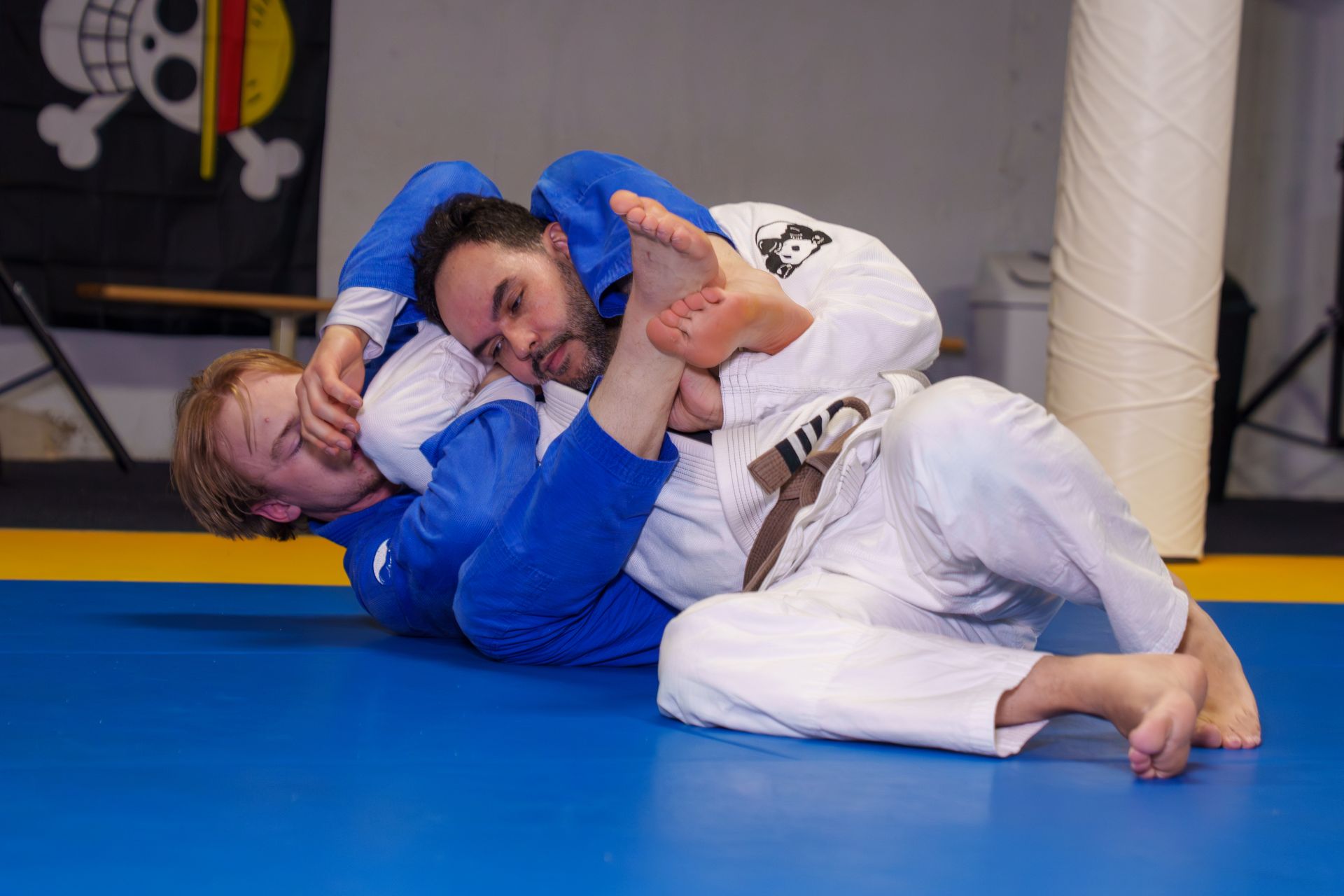
Balance in the real world is rarely about standing on one leg and hoping for the best. It is about keeping structure while you push, pull, twist, and react. Jiu Jitsu forces your body to solve those problems constantly. You learn to keep your hips under you, align your spine, and use your hands and feet as posts, all while another person tries to move you.
A big difference between mat balance and everyday balance is context. On the mats, you are balancing while someone is actively disrupting your base. That pressure is what teaches you to make adjustments quickly and efficiently. Over time, your body starts to recognize when you are off angle, when your weight is too far forward, or when your hips are floating, and you fix it without overthinking.
We also build balance through repetition of specific movement patterns. Simple things like technical stand ups, hip escapes, and controlled transitions teach you how to move without collapsing your posture. Those skills carry over into everything from running and lifting to picking up a kid or stepping off a curb in the winter.
Core Strength in Brazilian Jiu Jitsu: What It Really Means
When most people say core, they usually mean abs. On the mats, core strength is broader. It is your ability to transfer force between your upper body and lower body without leaking energy. It is also your ability to brace, rotate, and resist rotation while staying relaxed enough to keep breathing.
In Brazilian Jiu Jitsu in Bethlehem PA, we train the core in three main ways: stabilization, rotation, and endurance. Stabilization shows up when you hold posture in someone’s guard, keep your base while passing, or frame effectively on bottom. Rotation shows up in bridges, hip switches, and turning escapes. Endurance shows up because you repeat these patterns for rounds, not just a single set of ten reps.
One of the most underrated parts is breathing. When your breathing gets frantic, your trunk gets loose, your hips drift, and your balance goes with it. We coach you to slow down, find your posture, and make your core work feel steady instead of panicked.
The Balance Skills You Practice Every Class
Balance is not something we lecture about for ten minutes and then hope you figure out. You practice it in warm ups, technique, and live training. Even the basics have balance baked in, especially in the first months of training.
Here are a few balance focused skills you will see often in class:
• Posting and base management, learning where to place hands and feet so you do not tip over during transitions
• Hip positioning, keeping your hips heavy and connected so you can stay stable on top or create space on bottom
• Head and spine alignment, using posture to prevent your weight from drifting past your base
• Controlled stepping and knee tracking, moving around legs and frames without crossing yourself up
• Tempo changes, learning when to be slow and heavy versus when to move quickly and reset
What makes this different from a typical balance drill is the feedback. If your base is wrong, you will feel it immediately. If you fix it, you will feel that too. That quick feedback loop is a big part of why people improve faster than they expect.
Core Strength Moves Hidden Inside Everyday Techniques
You do not need a separate core day to build a strong trunk here. The techniques themselves are core training, especially when you do them with good mechanics instead of muscling through.
Take the hip escape. Done correctly, it is a coordinated movement of ribs, pelvis, and legs. Your trunk stays braced, you create space, and you move your hips away without flattening out. Bridges are similar. A clean bridge is not just a big arch, it is a powerful hip drive with control through the midline so you can turn and recover guard or reverse position.
On top, passing requires constant trunk stability. If your posture collapses, you get pulled forward. If your hips float, you lose pressure. Over time, you develop what students often describe as a quieter kind of strength. You do not feel like you are straining all the time, you feel connected.
Adult Jiu Jitsu in Bethlehem PA: What Progress Looks Like in the First 90 Days
Most adults want a realistic path. You want to know what changes you can actually expect, especially if you are juggling work, family, and whatever your calendar is doing this week.
In the first few weeks, the biggest change is awareness. You start noticing your posture and how your hips move. You might feel sore in places you did not expect, like your obliques or deep hip muscles. That is normal, because you are using stabilizers that do not get much attention in everyday life.
By weeks four to eight, your movement gets less frantic. You begin to frame more effectively, your bridges feel more coordinated, and you stop holding your breath as often. Your balance improves because you are learning to post and recover without overcommitting.
By the end of about 90 days, many students feel a clear difference in how they move day to day. Getting up off the floor feels easier. You feel more stable when you carry things. You might even notice better posture at your desk, which is a nice surprise.
How Our Class Structure Supports Strength Without Beating You Up
Building core strength and balance requires consistency, and consistency requires training that you can actually recover from. Our schedule includes adult classes across multiple levels and formats, including Fundamentals, No Gi, Advanced, and Women’s classes. That variety matters because it lets you progress without trying to force your body into one single pace.
Fundamentals is where you learn clean mechanics. We slow things down enough that you can understand where your base is and how your hips should move. No Gi tends to increase movement and scrambling, which can challenge balance and conditioning in a different way. Advanced training adds complexity and sharper timing, but still builds on the same foundations of posture, base, and efficient movement.
We also keep safety and longevity as a priority. You can train hard here, but hard does not have to mean reckless. Tapping early, training with control, and choosing the right intensity for the day are part of learning.
A Simple Weekly Plan to Build Core and Balance on the Mats
If your goal is balance and core strength, you do not need to do everything at once. A steady plan is better than an aggressive plan that you quit after two weeks.
Here is a practical approach many adults use:
1. Train Fundamentals two days per week to build posture, base, and escapes with good form
2. Add one day of No Gi once you feel comfortable moving, to challenge balance under faster transitions
3. Finish each class by noting one position where you lost balance, then ask us how to fix the base next time
4. Keep one or two rest days truly restful so your core and hips recover instead of staying tight
5. Reassess after four weeks and adjust frequency based on energy, sleep, and soreness patterns
If you are already active, you can often increase training days sooner. If you are coming back from a sedentary stretch, we would rather see you train consistently at a manageable pace than go all in and disappear.
Small Technique Cues That Make a Big Difference
Most balance and core breakthroughs come from small corrections, not big motivational speeches. A few cues we use constantly:
Keep your elbows connected when framing so your shoulders do not drift and your ribs stay stacked. Drive with your hips, not your lower back, especially on bridges. When you stand up, build posts first, then rise, instead of popping up and tipping forward. And if you are stuck, breathe out slowly and rebuild posture before you explode again.
These details sound simple, and that is kind of the point. Strong cores and good balance are usually the result of doing the basics well for a long time.
Ready to Train Smarter in Bethlehem?
Building better balance and core strength through Jiu Jitsu is not about chasing exhaustion, it is about learning how your body moves and then refining it until it feels reliable. When you train with structure, you get stronger where it counts: hips that stay under you, posture that holds up under pressure, and a core that can brace and rotate without feeling fragile.
If you want to experience that process in person, we make it straightforward to start at Inverted Gear Academy in Bethlehem, PA. We will help you choose the right class level, learn the fundamentals safely, and build the kind of strength that shows up both on the mats and in everyday life.
Build stronger grappling fundamentals and refine your technique by training consistently at Inverted Gear Academy.