
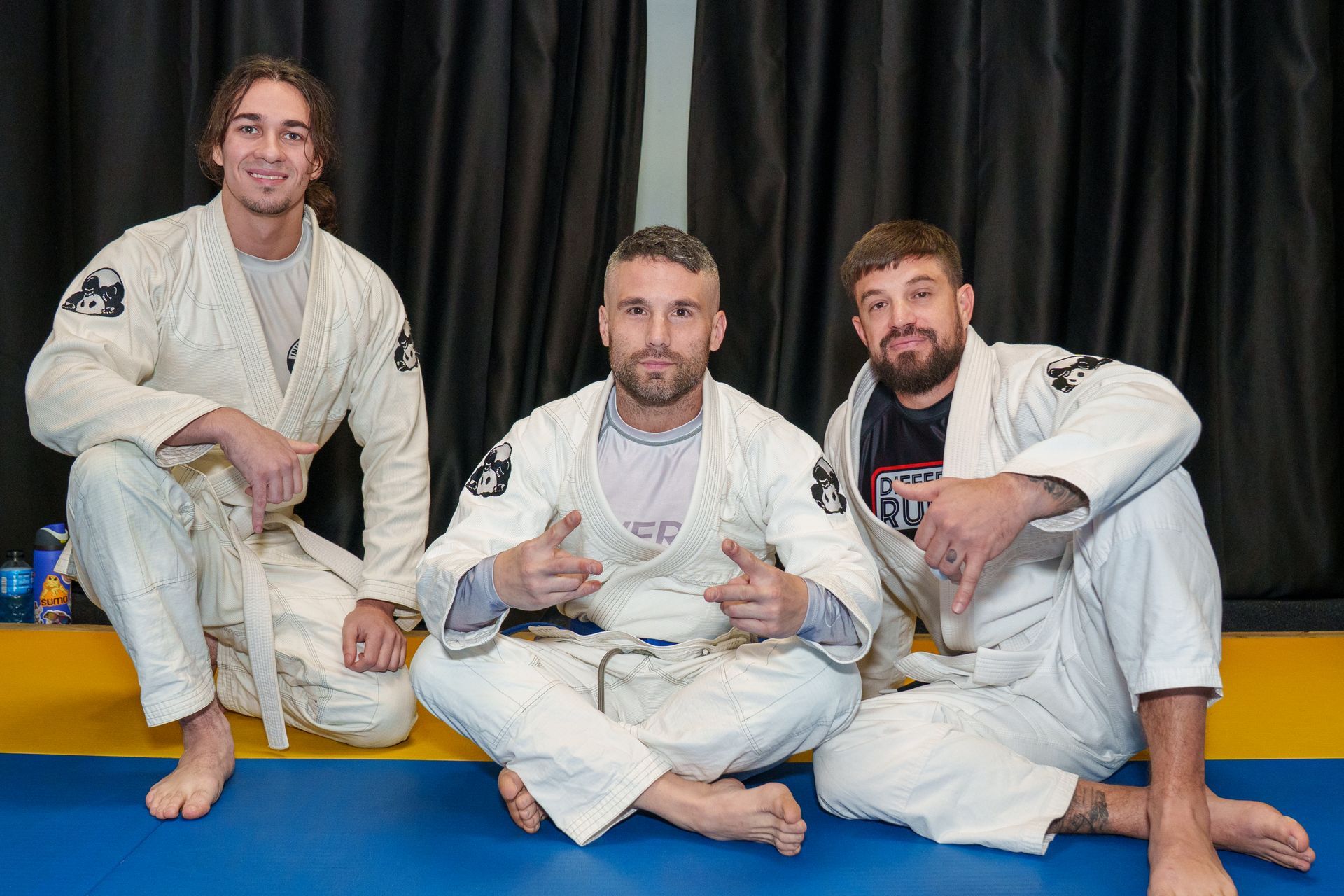
The fastest way to feel like you belong in Bethlehem is to share hard rounds, honest laughs, and steady progress on the mats.
Friendship can feel oddly hard to find as an adult. Schedules get packed, social circles shrink, and even “meeting people” often stays surface-level. That is one reason we love jiu jitsu so much: it creates real connection through shared effort, not awkward small talk.
In our Bethlehem martial arts community, we see something simple play out every week. You show up to learn a skill, and you end up building trust with training partners who notice your progress, encourage you, and keep you accountable. That is not an accident. The way jiu jitsu is practiced makes community almost unavoidable, in the best way.
Research backs up what we experience on the mats. In one survey of adult Brazilian Jiu-Jitsu participants, 100 percent reported a strong sense of community, and many also reported improved confidence, reduced anxiety, and better mood. When you put consistent training, supportive partners, and a shared challenge together, friendships tend to stick.
Why Jiu-Jitsu is uniquely good at creating real friendships
Most hobbies let you stand next to someone; jiu jitsu requires you to work with someone. Training partners help you learn positions, timing, and control, and you return the favor. Over time, that back-and-forth builds familiarity and respect in a way that feels practical, not forced.
Unlike many fitness spaces, jiu jitsu does not reward ego for long. If you come in trying to “win” every moment, the training quickly teaches you that progress comes from curiosity and consistency. That shift in mindset tends to make the room safer socially, too. When most people are here to learn, the vibe becomes welcoming.
Another factor is that jiu jitsu gives you a shared language. Even if you have very different day jobs or backgrounds, you can talk about guard passing, grips, escapes, and that one detail that finally made a technique click. Those little conversations add up, and they turn into genuine connection.
The “mat agreement” that makes community feel safe
A strong community is not just friendly. It is also structured. In jiu jitsu, the structure comes from a few core expectations we reinforce in every class: respect your partners, keep each other safe, and train with control.
That matters because physical training can be intimidating if you do not know what to expect. Clear norms remove a lot of social friction. You do not have to guess how intense things will be or how people treat beginners. When everyone follows the same rules, you can relax and focus on learning.
This is also why new students often tell us they were surprised by how welcoming the room felt. You might expect a rough environment, but what you usually find is a group of people who want you to improve, because it makes training better for everyone.
How a typical class quietly builds friendships
Connection in jiu jitsu rarely comes from one big moment. It comes from small repetitions that place you side by side with the same people, week after week. Class creates a rhythm where you naturally talk, collaborate, and laugh a little at the awkward parts of learning.
Our classes generally include technique instruction, drilling, and live rounds. Each part supports community in a different way:
• Technique time gives you a low-pressure way to partner up and communicate
• Drilling creates teamwork, because you need feedback and timing
• Live rolling creates trust, because you are practicing intensity with control
• Cooldown and post-class conversations create space for real friendships to form
Even quick interactions matter. Someone shows you how to frame better from bottom side control. You help someone else with a grip sequence. You both nod like, “Okay, that worked.” That is how relationships start here.
The beginner experience in Bethlehem: what to expect socially
If you are searching for jiu jitsu Bethlehem PA options, you might be wondering how it feels to walk in on day one. The short version is: you do not need to be “a jiu jitsu person” already. You just need to be willing to learn.
Beginners usually worry about three social things: being out of shape, slowing the class down, or not fitting in. We plan for beginners, so you are not interrupting anything by being new. You are the reason a fundamentals-focused environment exists.
You can also expect people to help you with basics that are not obvious at first, like how to tie your belt, how to move safely, and how to communicate during rounds. That kind of support is one of the most underrated parts of Bethlehem martial arts training. It turns nerves into familiarity pretty quickly.
The role of challenge: why hard training bonds people faster
Shared challenge is a shortcut to real connection. When you have both struggled through the same learning curve, you understand each other without needing a lot of explanation. Jiu jitsu gives you that shared challenge in a controlled way.
Rolling can be intense, but it is also oddly clarifying. You cannot multitask. You cannot fake focus. You are either present or you are not. Many adults describe this as a form of mental reset, and studies have linked jiu jitsu participation to improved mood and reduced anxiety for a large majority of practitioners.
That is part of why the friendships last. You are not just hanging out. You are improving together, managing stress together, and building a skill set that rewards patience. Those are sturdy building blocks for community.
Confidence, anxiety relief, and why community grows from those benefits
A big reason people stick with jiu jitsu is the internal change. When you feel more capable, you show up differently in life. And when a room is full of people working on that same growth, the environment becomes supportive almost by default.
Survey data has found that 87.6 percent of adult participants reported improved confidence, 87.5 percent reported reduced anxiety, and 96.9 percent reported better mood. We see versions of that all the time: students standing a little taller, taking feedback more calmly, and feeling comfortable starting conversations they would have avoided before.
Confidence also makes community easier because you stop worrying about being judged for learning. You ask questions. You try. You fail. You laugh. That openness is contagious, and it is one reason new members get welcomed so quickly.
How long it takes to feel connected on the mats
People often assume community takes a long time. In jiu jitsu, you can feel it in weeks, sometimes faster, because you train closely with partners and see the same faces consistently.
A realistic timeline looks like this:
1. Week 1 to 2: you learn names, basic etiquette, and you start recognizing friendly faces
2. Week 3 to 6: you begin having regular partners, and you talk before and after class naturally
3. Month 2 to 3: you notice people tracking your progress and celebrating small wins with you
4. Month 4 and beyond: you feel like you are part of a team, not just attending a class
The key is consistency. Nationally, many practitioners train around six hours per week, and even two to three classes weekly is enough to build momentum. The more regularly you train, the faster those social connections become familiar and reliable.
Community in action: what good training partners actually do
“Friendly” is nice, but what matters more is how people behave while training. Healthy jiu jitsu culture shows up in small habits that keep the room safe and encouraging.
Here are a few behaviors we coach and appreciate because they build trust fast:
• Matching intensity so rounds stay productive instead of chaotic
• Giving quick, useful feedback like “turn your hips” rather than criticism
• Checking in after tough rounds to make sure your partner is okay
• Celebrating improvements, even when someone taps you with a new technique
• Being open to training with different sizes, ages, and experience levels
When that is the norm, it becomes easy to show up after a long day and know you will be supported. You get challenged, yes, but you are not left alone in it.
Why this matters specifically for adults in their 30s and beyond
One of the most common demographics in the US jiu jitsu scene is adults around age 30. That tracks with what we see locally: professionals, parents, shift workers, and people who want a demanding hobby that also improves their health and mindset.
Jiu jitsu works well for adults because it is technique-driven and scalable. You can train hard without needing to be the strongest person in the room. You can focus on defense and escapes while you build confidence. And you can make meaningful progress without needing a “perfect” athletic background.
The social side matters here, too. Adults do not just want another workout. You want a place that feels like a second home, where you can exhale a bit and be around people who are also trying to become tougher, calmer, and more capable.
Building a stronger Bethlehem through consistent, respectful training
When people ask how jiu jitsu builds community, the answer is not complicated. It builds it through repeated trust. You rely on partners to train safely. You practice humility because everyone taps. You learn to communicate clearly under pressure. Those are skills that carry into work, family, and everyday life.
Bethlehem is full of busy people who want connection that fits into real schedules. That is where structured training helps. You do not have to plan a big social calendar to meet good people. You show up, train, and community forms around the shared effort.
And because jiu jitsu is a long-term practice, the friendships have room to deepen. You see people improve over months and years. You share setbacks, breakthroughs, and the quiet satisfaction of doing something difficult on purpose.
Take the Next Step
If you want more than a workout, jiu jitsu is one of the most reliable ways we know to build lasting friendships and a stronger support system in Bethlehem. When training is consistent and the culture is respectful, you get skill development and community at the same time, and that combination tends to change people for the better.
We built Inverted Gear Academy to be exactly that kind of place: a room where you can work hard, learn steadily, and feel connected to the people around you. If you are ready to experience jiu jitsu Bethlehem PA training in a way that actually feels welcoming, we would love to have you join us.
Take the first step toward stronger skills, better fitness, and greater confidence to start training at Inverted Gear Academy today.