
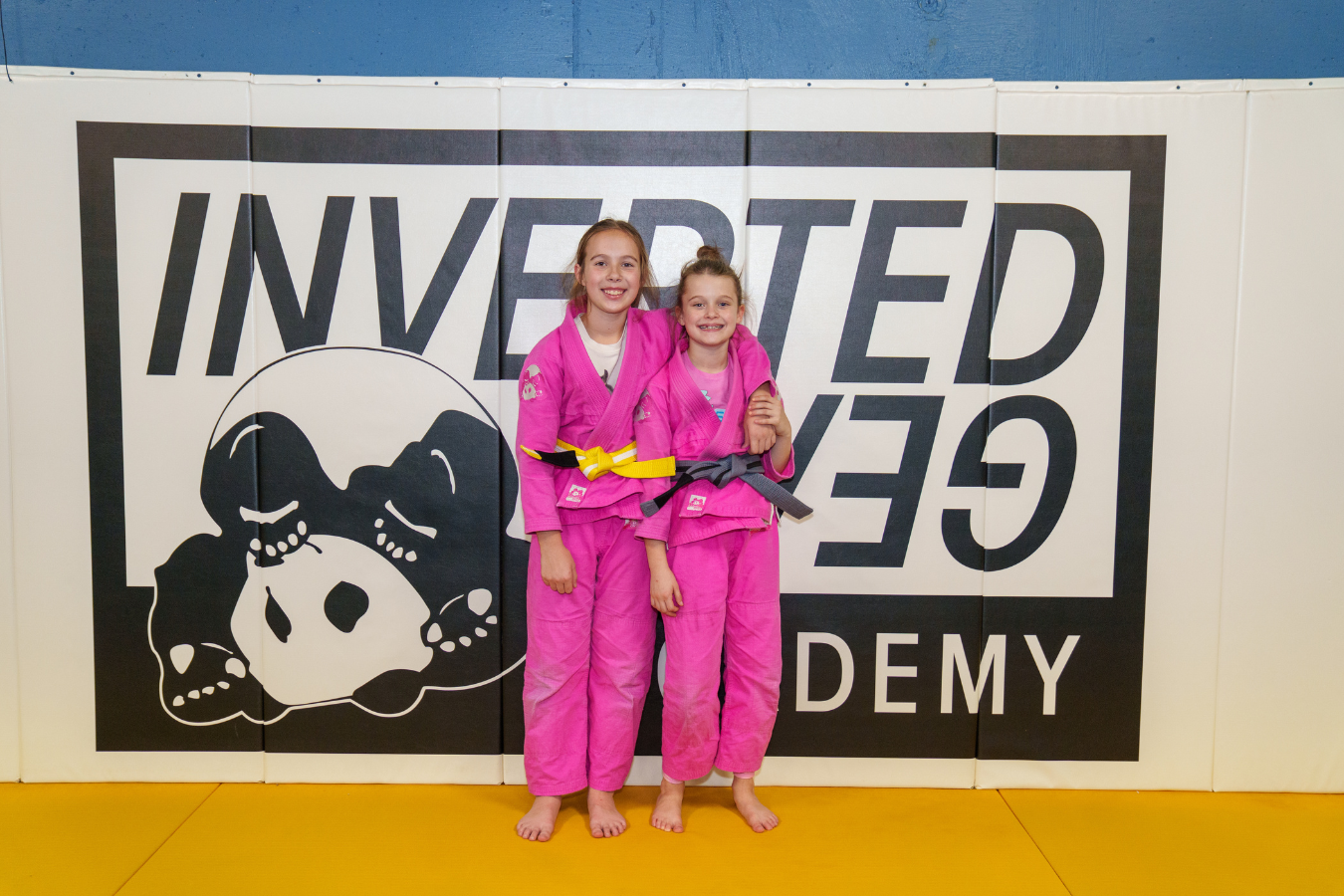
A good jiu jitsu class gives teens a place to practice focus, respect, and calm under pressure, week after week.
Teen years come with a lot of noise, from packed school schedules to constant notifications and social pressure that never really turns off. When you are trying to help your teen build real discipline, generic advice rarely sticks. We have found that jiu jitsu works because it is not a lecture. It is a structured practice where effort shows up clearly, and progress has to be earned.
In our teen program, discipline is not framed as punishment or “being tougher.” It is framed as a skill. Jiu jitsu gives teens a predictable routine, clear expectations, and immediate feedback. That combination does something school and screens often do not: it teaches your teen how to focus on what matters right now, even when life feels distracted.
Just as important, leadership grows naturally on the mat. Teens learn how to communicate, how to stay composed when something goes wrong, and how to help training partners improve. Over time, the same habits that help someone escape a bad position start showing up in daily life too, like better follow-through, stronger boundaries, and more confidence in group settings.
Why jiu jitsu works for teen discipline when motivation comes and goes
Motivation is unreliable for adults, so we do not expect teens to have endless motivation either. What works better is a system that rewards consistency. Jiu jitsu is built around a class structure that repeats often enough to become familiar, but changes enough to stay interesting. That matters for teens who get bored quickly or who feel overwhelmed by too many expectations.
A typical class has warm-ups, technical instruction, partner drills, and live sparring. Each piece plays a role in discipline. Warm-ups teach preparation. Drills teach repetition and attention to detail. Sparring teaches decision-making under pressure. Teens learn that showing up and doing the work matters more than having a “perfect” day.
We also see discipline improve because jiu jitsu is honest. If you skip details, you feel it. If you rush, you get off balance. If you do not manage your breathing, you gas out. That feedback loop helps teens connect actions to outcomes, which is the foundation of self-discipline.
The class structure that quietly builds focus and self-control
Teens do not need a motivational speech to learn focus. They need an environment where focus is required, then reinforced. Our classes are designed to keep teens engaged while still holding a high standard for attention and respect. We coach teens to listen, try, adjust, and try again.
That process is a form of mindfulness, even if we do not label it that way. You cannot scroll through your phone mid-round. You cannot half-pay attention during a drill and still expect it to work. Over time, teens learn presence, which is increasingly rare.
Recent insights in the martial arts world have pointed to jiu jitsu as a strong counterweight to digital-age distraction, largely because it trains calm and presence under pressure. We see that show up in small ways first, like a teen who starts making eye contact when receiving instruction, or a teen who stops quitting when something feels difficult.
Discipline you can measure: goals, belts, and the power of earned progress
One reason teens stick with jiu jitsu is that the path forward is visible. Skill development is broken into pieces, and progress is recognized through stripes and belts. That recognition is not random. It comes from time, effort, and consistent improvement.
This is where goal-setting becomes real. Instead of vague goals like “get in shape,” teens learn goals like “keep my posture in closed guard,” or “escape side control using the steps we drilled.” Those goals are specific, and they can be practiced repeatedly. When a teen hits a small goal in sparring, it feels personal and earned, which builds intrinsic motivation.
Some studies and program reports in youth martial arts have noted a roughly 70% increase in self-discipline and strong improvements in conflict resolution for teens who train consistently. We never treat numbers like magic, but the direction makes sense. Repetition plus accountability plus mentorship tends to produce disciplined behavior.
Leadership starts as partner responsibility, then grows into real confidence
Leadership in teens often looks different than adults expect. It is not always loud. Sometimes it is the teen who shows up early, helps a newer student tie a belt, or stays calm when a partner makes a mistake. In jiu jitsu, those small moments are part of the culture.
As teens gain experience, we give more responsibility in appropriate ways. Advanced teens often become informal mentors during drills. That is not about being “in charge.” It is about learning to communicate clearly, encourage others, and model self-control. Those skills transfer directly to school group projects, part-time jobs, and team environments.
We also emphasize humility as a core leadership trait. Jiu jitsu has a built-in way of teaching it: you can do everything right and still get caught. That keeps ego in check and teaches teens to lead by learning, not by posturing.
What leadership looks like in a teen jiu jitsu class
Here are a few leadership behaviors we intentionally coach and reinforce:
• Helping a newer student understand a drill without taking over or rushing the explanation
• Choosing control and safety in sparring, especially when training with smaller or less experienced partners
• Communicating clearly, like saying when something feels unsafe and listening when a partner sets a boundary
• Staying composed after tapping and returning to the next round with a focused, respectful attitude
• Being consistent, because reliability is one of the most practical forms of leadership
These habits may look simple, but for many teens they are a big shift. And once a teen realizes, “I can handle hard things without melting down,” confidence tends to follow.
Resilience and emotional regulation: learning to think while tired
Jiu jitsu is physically demanding, but the deeper challenge is mental. Teens have to solve problems while breathing hard and feeling pressure. That experience is a training ground for resilience. Instead of panicking, they learn to slow down, create frames, and work step by step.
That mindset carries over. School stress becomes more manageable when a teen has practiced staying calm in uncomfortable situations. Social pressure becomes easier to navigate when a teen has learned how to set boundaries and hold them. Even frustration changes, because jiu jitsu normalizes the idea that mistakes are part of learning, not proof of failure.
We also see improvements in emotional regulation. During sparring, emotions show up fast: excitement, embarrassment, irritation, nerves. We coach teens to acknowledge those feelings without acting on them. That is a leadership skill too, because people trust someone who can stay steady.
Anti-bullying and self-defense benefits without turning teens aggressive
Parents often ask if jiu jitsu will make a teen more aggressive. Our experience is that it usually does the opposite when the environment is healthy and structured. Teens who feel capable tend to posture less. They do not have to prove anything.
From a practical standpoint, jiu jitsu teaches leverage, control, and escapes. It is a grappling art that emphasizes technique over strength, which can help a wide range of body types. That makes it especially useful for teens who feel smaller, shy, or physically overmatched in everyday life.
Youth training reports often cite a reduced bullying risk, sometimes around 50%, when students gain confidence and boundary-setting skills. We focus on awareness, de-escalation, and the ability to stay calm. The goal is not to fight. The goal is to have options and not feel trapped.
Why teens in Bethlehem benefit from a consistent third space
Bethlehem is a busy place for families. Between school, sports, and commuting, teens need a positive third space where expectations are clear and effort is rewarded. Our academy becomes that place for many families, a routine that anchors the week.
This is also where local relevance matters. If you are searching for jiu jitsu Bethlehem PA, you probably want something close enough to become consistent. Discipline and leadership do not come from a one-time workshop. They come from training a few times per week, seeing familiar coaches and teammates, and slowly realizing you are becoming the kind of person who follows through.
We keep our training environment supportive and structured, because teens do best when the rules are simple: be respectful, work hard, keep your partners safe, and stay curious. The culture does a lot of the heavy lifting.
How often should teens train to see discipline and leadership gains
Consistency beats intensity. For most teens, we recommend starting with a sustainable schedule and building from there. The “best” frequency depends on school workload, sports seasons, and how your teen handles stress.
As a practical guideline, many teens see noticeable changes with 2 to 3 classes per week. Training 3 to 5 times per week can accelerate skill development and habit-building, especially for teens who enjoy the structure and want faster progression. The key is to keep it manageable so your teen does not burn out.
A simple way to set your teen up for success
If you want a plan that feels realistic, we suggest this progression:
1. Start with two classes per week for the first month to build routine and comfort
2. Add a third class if your teen is recovering well and staying motivated
3. Track one specific goal per week, like posture, breathing, or a single escape sequence
4. Encourage basic recovery habits: hydration, sleep, and a meal after training
5. Revisit the class schedule every school quarter and adjust based on workload
That approach keeps the focus on long-term growth, not short bursts of effort.
Teens and families training together: a leadership shortcut most people miss
One trend we have noticed is that teens often grow faster when training is supported at home. Sometimes that means a parent helps with rides and routine. Sometimes it means family members train too. When families share the same language of effort, calm, and respect, it becomes easier for teens to stay consistent.
This is also where our adult program can matter. If you have looked up adult jiu jitsu in Bethlehem PA, you may already be thinking about joining your teen on the mats in some capacity. Teens often take leadership cues from what adults do, not just what adults say. When a teen sees a parent learning, tapping, and returning to class anyway, that is a powerful model of humility and discipline.
Take the next step with Inverted Gear Academy
If you want your teen to build discipline that lasts and leadership that feels natural, jiu jitsu gives a clear path: show up, practice with purpose, learn from mistakes, and help others improve along the way. That combination is rare, and it tends to stick because it is lived, not preached.
At Inverted Gear Academy, we run teen classes in Bethlehem, PA with a structured curriculum, a safety-first training culture, and coaching that treats discipline and leadership as trainable skills. If you are ready to see what that feels like in person, the next step is simple: come in, meet us, and try a class.
No experience is required to begin to join a class at Inverted Gear Academy and learn step by step.